
Hetch Hetchy and Glen Canyon are often cited as the most controversial dams in the United States. In both cases, wild landscapes were sacrificed for water and power needs, and two of the American West’s most stunning river canyons were buried under reservoirs.
Restore Hetch Hetchy is dedicated to returning to the people Yosemite Valley’s lost twin, Hetch Hetchy – a majestic glacier-carved valley with towering cliffs and waterfalls, an untamed place where river and wildlife run free, a new kind of national park. The Glen Canyon Institute is dedicated to the restoration of Glen Canyon and a free flowing Colorado River through Grand Canyon.
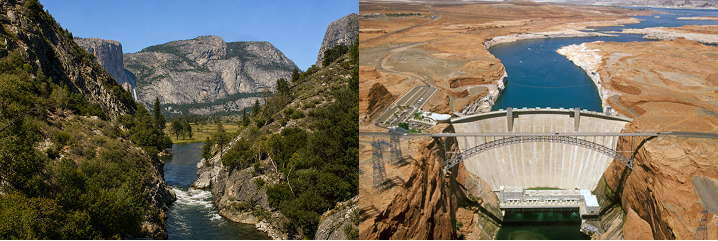
Dams at Hetch Hetchy and Glen Canyon were built, naturally, at narrow spots in their respective river canyons. Hetch Hetchy Reservoir (360,000 acre-feet) is tiny compared to Glen Canyon, only 1/67th as large.
San Francisco lobbied for more than a decade to build a dam at Hetch Hetchy, and was initially repulsed by the U.S. government with the support of John Muir and his nascent Sierra Club. In 1913, however, Congress passed and President Wilson signed the Raker Act in 2013, allowing the City to build O’Shaughnessy Dam in Yosemite’s Hetch Hetchy Valley. The controversy turned the Sierra Club from an outing club to a political organization, as explained by author Robert Righter in “The Battle over Hetch Hetchy: America’s Most Controversial Dam and the Birth of Modern Environmentalism.”
Glen Canyon Dam was built in the late 1950s and early 1960s after the United State Government struck a compromise with the Sierra Club, led by David Brower. The Sierra Club had opposed the Bureau of Reclamation’s plan to build a dam upstream on the Green River that would have flooded Echo Park and acquiesced to building Glen Canyon Dam instead. Brower soon regretted the compromise, co-authoring a book (with Eliot Porter) called The Place No One Knew: Glen Canyon on the Colorado.
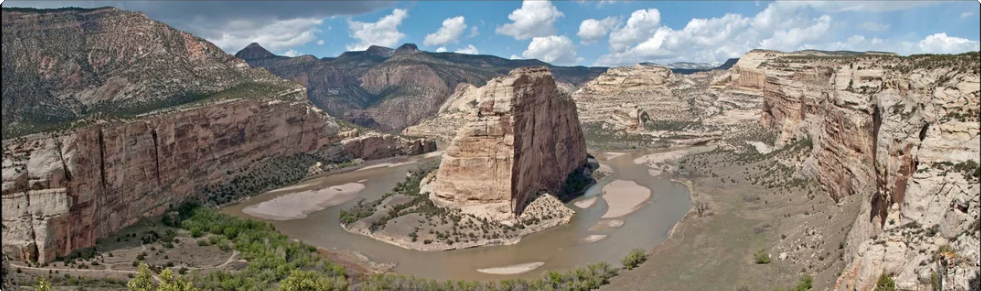
Steamboat Rock at the confluence of the Green and Yampa Rivers (tributary to the Colorado) in Echo Park within Dinosaur National Monument.
Restore Hetch Hetchy and the Glen Canyon Institute are further connected. Prior to a Congressional hearing in the mid 1990s , David Brower had worked with current RHH Executive Director Spreck Rosekrans on testimony regarding the limited utility of Glen Canyon Dam for water storage. Brower later recommended Rosekrans to Ron Good who was assembling the team that ultimately became Restore Hetch Hetchy.
Impending reductions in water supplies from the Colorado River have been prevalent in the news in 2026. The situation, however, has been steadily worsening since the 1980s – the last and only time that the river’s two huge reservoirs, Lake Mead (27,000,000 acre-feet behind Hoover Dam) and Lake Powell (24,000,000 acre-feet behind Glen Canyon Dam) were full. Increasing demand for water coupled with deceased runoff have seriously depleted both reservoirs, threatening their ability to deliver water and generate hydropower.
Allocations of Colorado River water are based on the Colorado River Compact of 1922, which relied on records from a particularly wet period to divide the river equally between the upper basin states (Wyoming, Colorado, Utah and New Mexico) and lower basin states (California, Arizona and Nevada) – with subsequent adjustments for Mexico. Storage has been depleted even without the upper basin states taking their full share; the Trump Administration has decreed the lower basin states must bear the burden of sharp reductions.
We don’t know whether the Administration’s edicts will simply be adopted or whether lawsuits and negotiations will follow. Urban southern California has been investing heavily in water recycling (see Yosemite’s Opportunity, page 5 ). Arizona may have the toughest time adjusting.
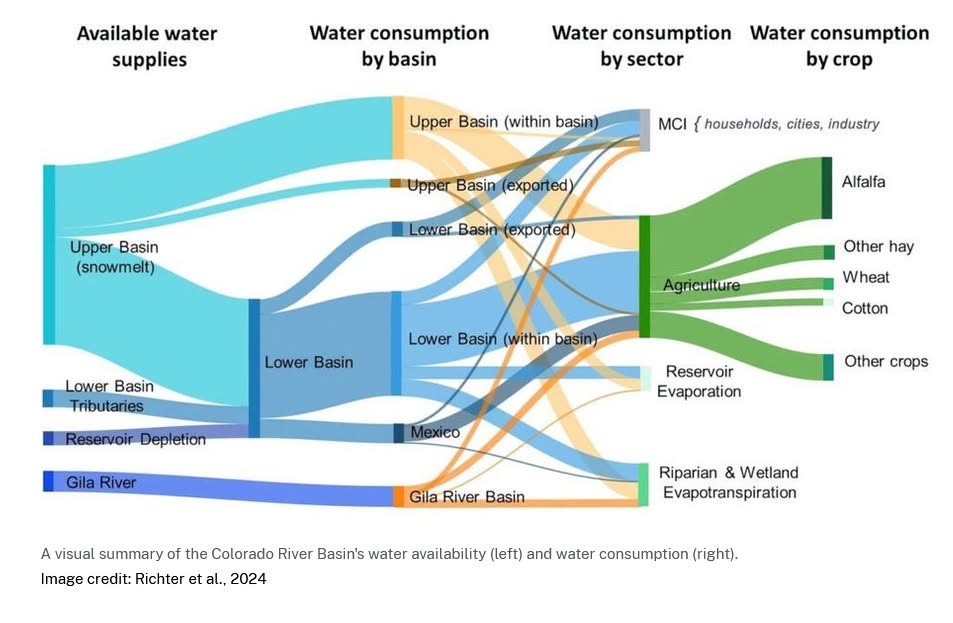
As the graphic shows, the bulk of the Colorado’s flow goes not to cities but to agriculture. Of course, food that is grown on farms goes to cities for people to eat. There is no getting around the requirement to use water to grow food.
But one crop stands out – alfalfa. Alfalfa feeds cattle and thus supports the dairy and beef industries. Arizona and California, with long growing seasons, have the highest yields on a per acre basis – twice that of Midwest states. But Midwest states don’t need to irrigate their alfalfa. Should “we” move alfalfa eats?
It’s tempting to say, let the market work this out – and the market will indeed do so to some degree. But water rights are based on history and politics, and have very little to do with the market. So the solution on the Colorado, whatever it is, will be a combination of law, politics and market economics.
While Lake Powell is at record low levels, it is not empty so Glen Canyon is not yet restored. There are credible arguments that total losses would be reduced if all storage was moved downstream to Lake Mead (while the rate of evaporation at the hotter downstream location is higher, bank seepage in the porous sandstone of Glen Canyon would be largely eliminated). The principal challenge to this approach might be massive institutional hubris as the federal Bureau of Reclamation would not want to concede that Glen Canyon Dam was never a particularly good idea.
Hubris also appears to be a barrier with officials in San Francisco. They are collectively reluctant to concede in any public way that San Francisco is the only city to build a dam in national park and that it could be restored with relatively simple water system improvements that have been commonplace throughout California. It’s time for city institutions to confront the damage it has caused by building America’s Most Controversial Dam and look to solutions that will make Yosemite National Park whole once again.
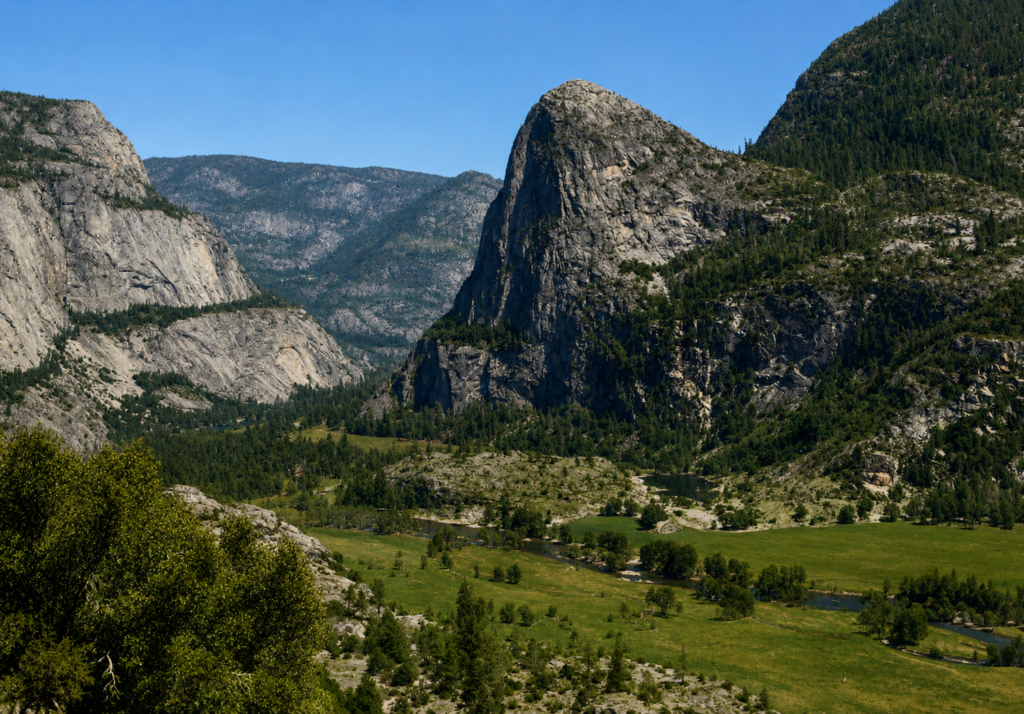
Photo Herbert Gleason (enhanced)