
Hetch Hetchy is a story that continues to fascinate. We focus on the opportunity for restoration – what it means for Yosemite National Park and how it would inspire future generations.
In The Man Who Dammed Hetch Hetchy: San Francisco’s Fight for a Yosemite Water Supply, however, Professor Donald C. Jackson focuses on the effort to design the project and authorize the dam by passing the Raker Act in Congress. It is a very good book and well told – even if the material is frustrating at times for us “nature lovers”.
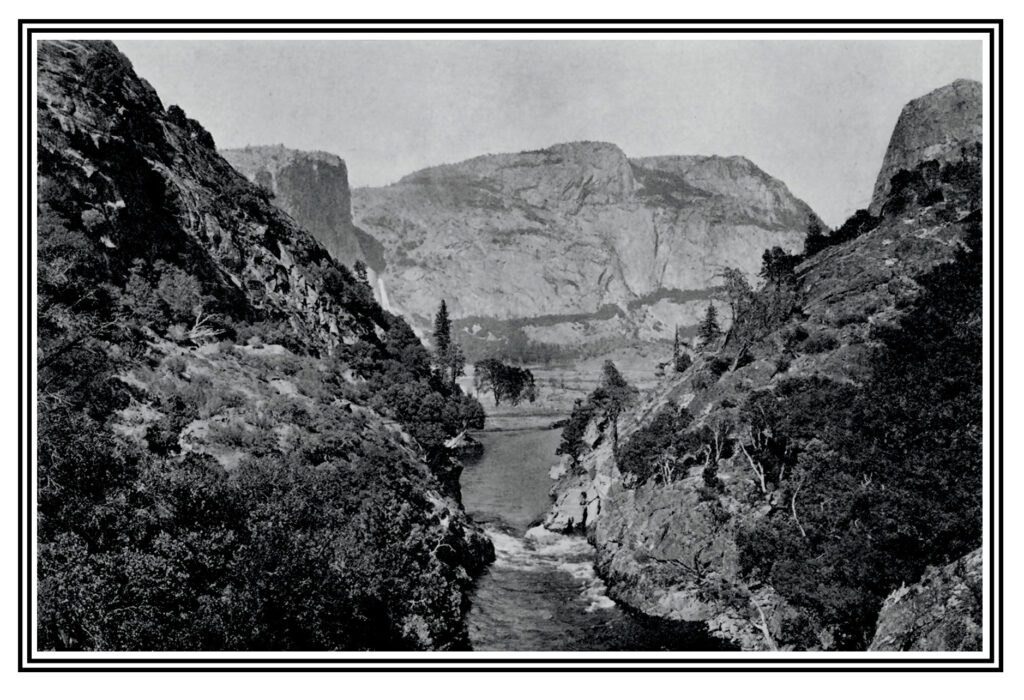
Was Hetch Hetchy even a cost-effective place to develop or was the narrow granite slot just too enticing a place to build a dam?
Jackson readily acknowledges that no one person gets full credit – not Michael Maurice O’Shaughnessy, the chief engineer who built the dam and for whom it is named – not John Raker who carried the legislation – and not even James Phelan, the former Mayor who personally filed for water rights on the Tuolumne before turning them over to the City of San Francisco.
The Man Who Dammed Hetch Hetchy is about John Freeman, the consulting engineer whose 421 page report dwarfed previous treatises by City officials, overwhelmed the Army Board of Engineers, and compelled Congress to pass legislation. Freeman sold the project as one that would provide access for the general public, not just the few “nature lovers” who, he claimed, wanted Hetch Hetchy for themselves. The water system Freeman designed and successfully promoted was also much larger than what San Francisco had previously proposed.
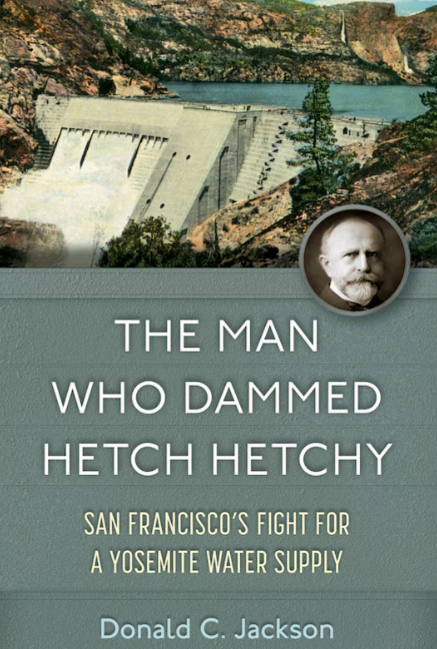
Indeed, had San Francisco not retained Freeman, Hetch Hetchy may never have been dammed.
The Freeman Report, officially titled The Hetch Hetchy Water Supply for San Francisco, 1912, was written in response to Secretary of the Interior Richard Ballinger’s order that San Francisco “show cause” as to why it needed to dam Hetch Hetchy rather than develop other means of obtaining water for the City. Ballinger intended for the Army Board of Engineers to review whatever the City submitted.
The Freeman Report is an impressive document indeed. The first section extols the compatibility between recreation and municipal reservoirs, with ample pictures of picnics, boating and lodges (recreation that has never been made available – see Keeping Promises, Restore Hetch Hetchy, 2021). Freeman’s design of the dam and the gravity-fed conveyance system to the Bay Area are meticulous and beautifully done. His analysis of alternative water supplies, however, as Jackson notes, primarily relied on work done by previous City engineers Carl Grunsky and Marsden Madsen and is less rigorous.
Did the Army Board of Engineers really review the Freeman Report or simply rubber stamp it? In a “A National Park Threatened”, the first of its six Hetch Hetchy editorials in 1913, The New York Times noted “The engineers say in their report that they have merely passed on such data as were presented by the officials of San Francisco, since they had neither time nor money to investigate independently the various projects presented.”
Jackson does provide detail of the Army Board’s review of the Freeman report, but a reasonable person may conclude that Freeman had committed his heart and soul to the Hetch Hetchy project and the Army Board never dug deep enough to see if it really was a better alternative (Professor Jackson may disagree.)
Even ignoring its damage to Yosemite, was damming Hetch Hetchy the best option for San Francisco? Or were the narrow granite slot and potential for hydropower simply too enticing for City engineers to consider an alternative? It took 21 years for water to get to the City after the Raker Act was passed. The dam and reservoir were completed in 1923 but water did not reach San Francisco until 1934 after the Coast Range Tunnel was completed. Chief Engineer Michael Maurice O’Shaughnessy, nicknamed “More Money” O’Shaughnessy, had to ask San Franciscans to buy more bond several times to finish the dam project.
By contrast it took the East Bay Municipal Utilities District only 5 years to develop water on the Mokelumne River for Oakland and Berkeley – in large part because they built a pipeline around Mt. Diablo rather than a tunnel.
After the1906 earthquake, however, San Francisco was hell bent on damming Hetch Hetchy, squashing any and all opposition. William Randolph Hearst and his SF Examiner smeared Taggart Aston, an engineer who had written to Congress opining that San Francisco should develop the Mokelumne River (see above) at lower cost. Courts later found Hearst and the Examiner guilty of libel, but by that time the debate over Raker Act was over and construction had begun.
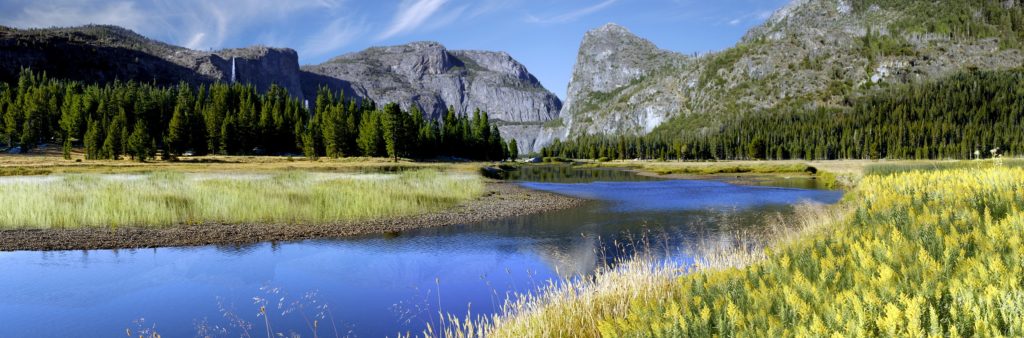
As they say, there’s no use crying over spilt milk. Focused the future on, The Cherry Solution, our most recent report, demonstrates how Hetch Hetchy Valley can be returned to its natural splendor while maintaining a reliable water supply for San Francisco and its customers.