
Yosemite National Park’s Hetch Hetchy Valley is perhaps the best known example of a spectacular landscape that was initially protected but subsequently developed.
Threats to protected lands continue. On Monday, July 13, President Donald Trump signed Executive Orders reducing the size of The Escalante – Grand Staircase and Bears Ears National Monuments.
The damming of Hetch Hetchy was accomplished through legislative means – when Congress passed the Raker Act. (Shenanigans were at play – William Randolph Hearst and his San Francisco Examiner were later successfully sued for libeling engineer Taggart Aston for daring to advocate for an alternative water project.)
President Trump intends to reduce the national monuments with a mere stroke of the pen. It seems doubtful that his action is legal, but we won’t know for certain until the actions are adjudicated by the courts.
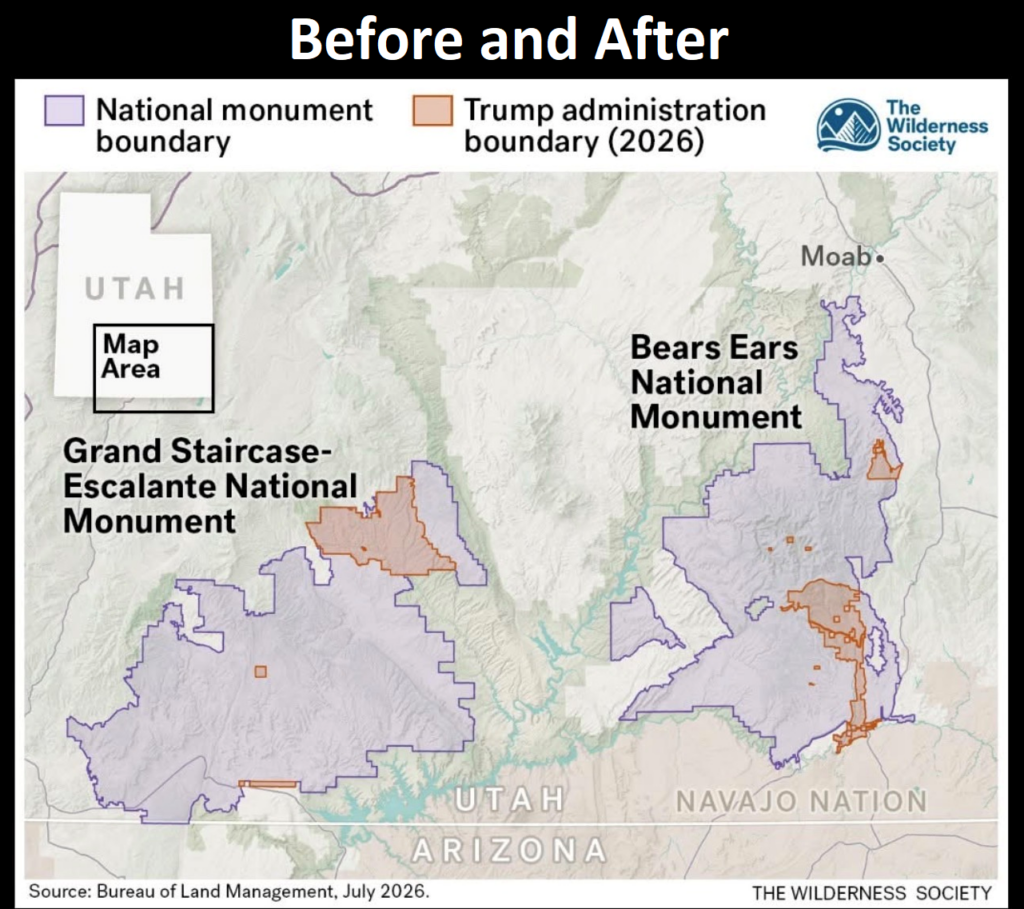
President Trump’s Executive orders, if upheld, would reduce the size of the monuments by more than 2,500,000 acres.
Lawsuits quickly followed Trump’s actions. The Bears Ears Commission (Hopi Tribe, Navajo Nation, Ute Mountain Ute Tribe, Zuni Tribe, and the Ute Indian Tribe of the Uintah & Ouray Reservation), Earthjustice and the Southern Utah Wilderness Alliance oppose the order and President’s legal authority to issue it. The order is supported by the State of Utah and local county governments.
At both monuments, there is a basic conflict between preserving natural landscapes and developing lands for mining coal and uranium. (Claims of opening access for hunting & fishing appear to have limited or no merit.) A fundamental unresolved issue, lingering for more than a century, is what right, if any, a President has to reduce the size of a national monument.
The primary purpose of the (very short) Antiquities Act, passed in 1906, was to give President Theodore Roosevelt power to prevent the looting of indigenous artifacts at Mesa Verde in Colorado. Roosevelt used the act to designate 18 monuments in all. Some, including the Grand Canyon and Mount Olympus, were later designated as national parks by Congress.
President Clinton designated the Escalante – Grand Staircase in 1996. Bears Ears is more recent and is the site of a tug-of-war between administrations over the last decade
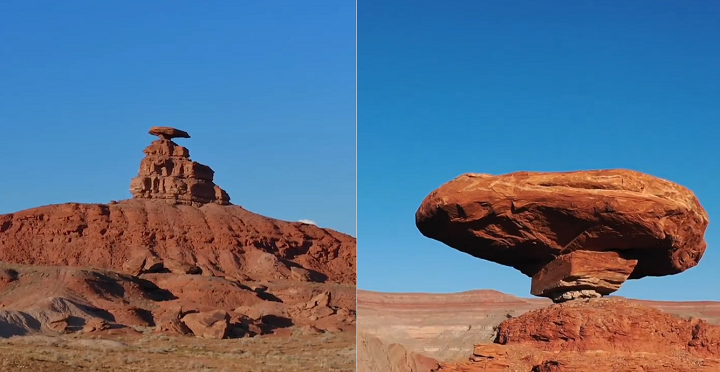
Mexican Hat, the famous rock formation, and nearby namesake hamlet lie just outside of Bears Ears.
- In 2015, the five sovereign nations formally united to form the Bears Ears Inter-Tribal Coalition, and petitioned the federal government to protect 1.9 million acres of land from looting, vandalism, and resource extraction.
- 2016, President Barack Obama used the 1906 Antiquities Act to establish Bears Ears National Monument, initially protecting roughly 1.35 million acres and establishing a tribal commission to manage the land directly with federal agencies.
- In 2017, President Trump signed an executive order reducing the monuments to 201,876 acres and splitting it into two smaller units: Indian Creek and Shash Jáa.
- In 2021, President Joe Biden restored the boundaries to 1.36 million acres and reinstated the joint-management partnership between the federal government and tribal nations.
- In 2026, President Trump scaled back the boundaries a second time, shrinking the monument to 121,100 acres, intending to open the area to mining – primarily coal and uranium.
Restore Hetch Hetchy is keenly aware that it is harder to restore a landscape once developed than to prevent development in the first place. As we have seen with a variety of dam removals, however, riverine environments come back quickly – a prospect that is truly inspiring for us.
Undoing the effects of large scale mining in southern Utah’s spectacular canyons, however, may not be possible. That’s why it makes sense for a law like the Antiquities Act to allow a President to protect an area but not to develop it. If development is truly warranted, let it survive the deliberative legislative process.
The language of the Antiquities Act does not provide any mechanism for reducing the size of a national monument. President Woodrow Wilson did, however, substantially reduce the size of Mt. Olympus National Monument (now Olympic National Park) in 1915, citing “The Great War” as rationale – but that and the handful of other reductions in the 20th century were never challenged.
Trump’s legal argument rests on the phrase “the smallest area compatible with the proper care and management of the objects to be protected” in Section 2 of the Antiquities Act. His previous attempt to reduce the monuments, in 2017, however, were rebuked by the Tenth Circuit Court of Appeals.
We hope the courts will continue to rule in favor of protecting public lands and further that Congress will respect and honor the wonderful landscapes of southern Utah and the local tribes who have lived there for millennia.
By the way, if you haven’t explored southern Utah, do it. The sandstone canyons, mountains and rivers are truly phenomenal.
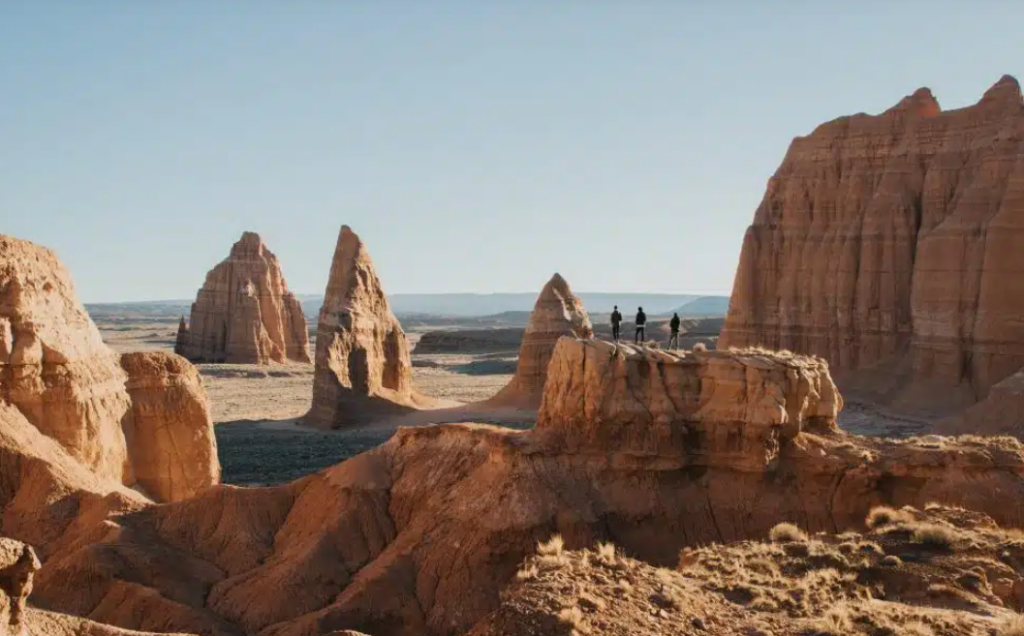
Cathedral Valley in Capitol Reef National Park – one of the plethora of treasures in southern Utah