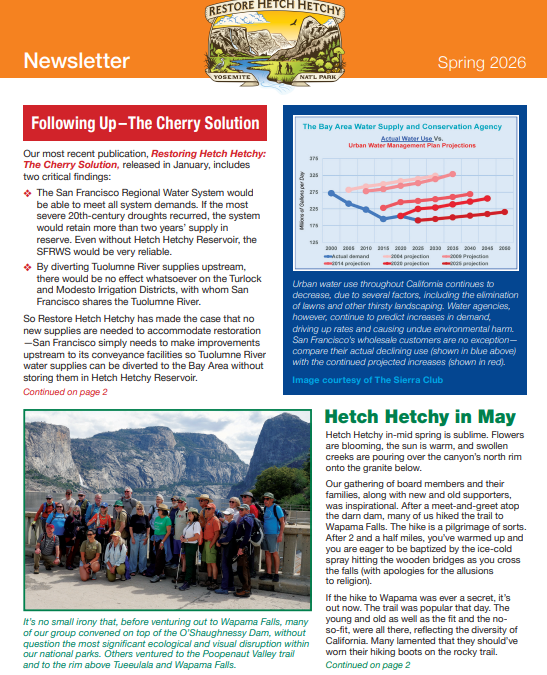
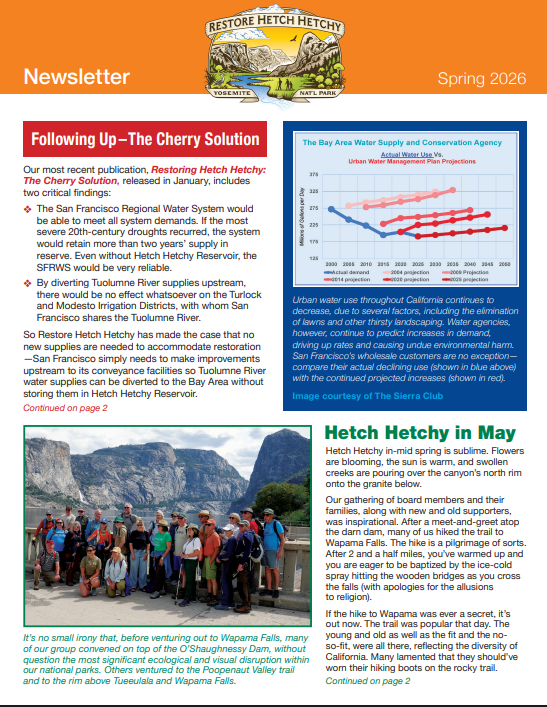
Our Spring Newsletter has been delivered to mailboxes and is posted online. If you have not received a hard copy but would like one – send an email to admin@hetchhetchy.org. Read about the follow up with elected officials to our Cherry Report, our early May trip to Hetch Hetchy, and our work with the National Park Service to improve access at Hetch Hetchy.
A bit more about fishing at Hetch Hetchy Reservoir. We’d heard rumors that access at Hetch Hetchy for fishing would likely be allowed before we wrote the newsletter, but we did not know when it might happen (the government can take a while to make changes). As we have noted, fishing itself was never explicitly prohibited – rather going below the high water mark of the reservoir was prohibited. So it was not possible to fish in any practical sense for most of the year.
The San Francisco Chronicle published a provocatively titled article about these new rules for fishing in Yosemite: Yosemite National Park’s permissive new fishing policies spark controversy. The article is really two stories. The first story is about the possibility that year round access will lead to overfishing. The second story, which includes some nice quotes from our friend David Gregory of Yosemite Outfitters, involves allowing access to Hetch Hetchy Reservoir for the first time.
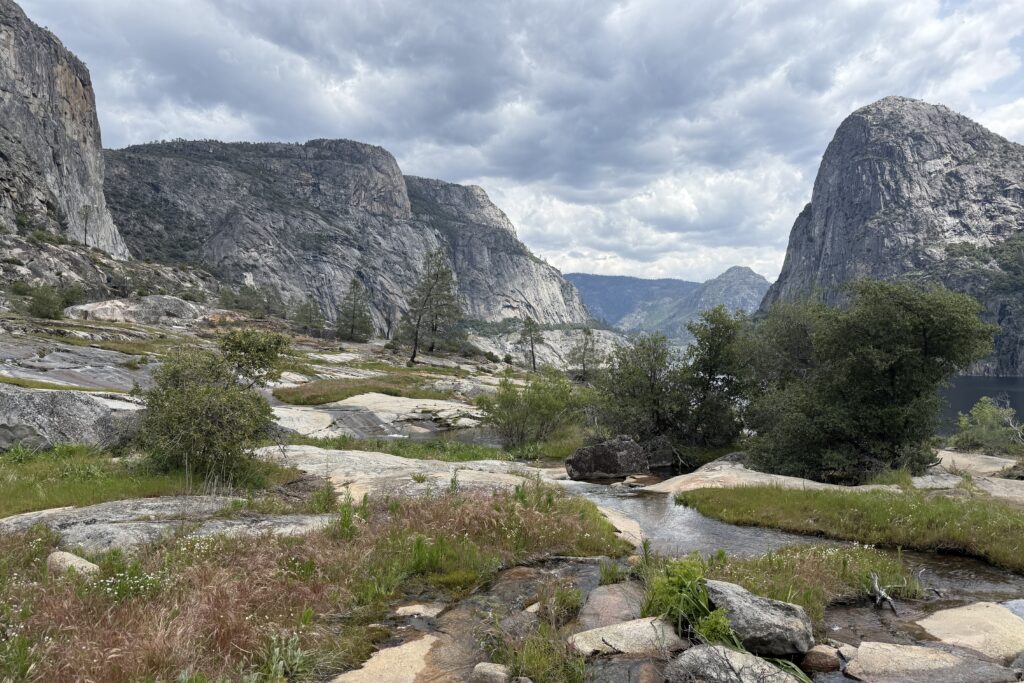
We hope park visitors can now climb over the rocks to reservoir’s edge and catch some nice trout. The real fishing, however, will not take place in the reservoir but rather in the Tuolumne River when the reservoir is relocated and the valley is restored.
Also, if you support restoring Hetch Hetchy to its natural splendor, please do not forget to sign our petition. We plan to share a long list of signatures with our elected officials!
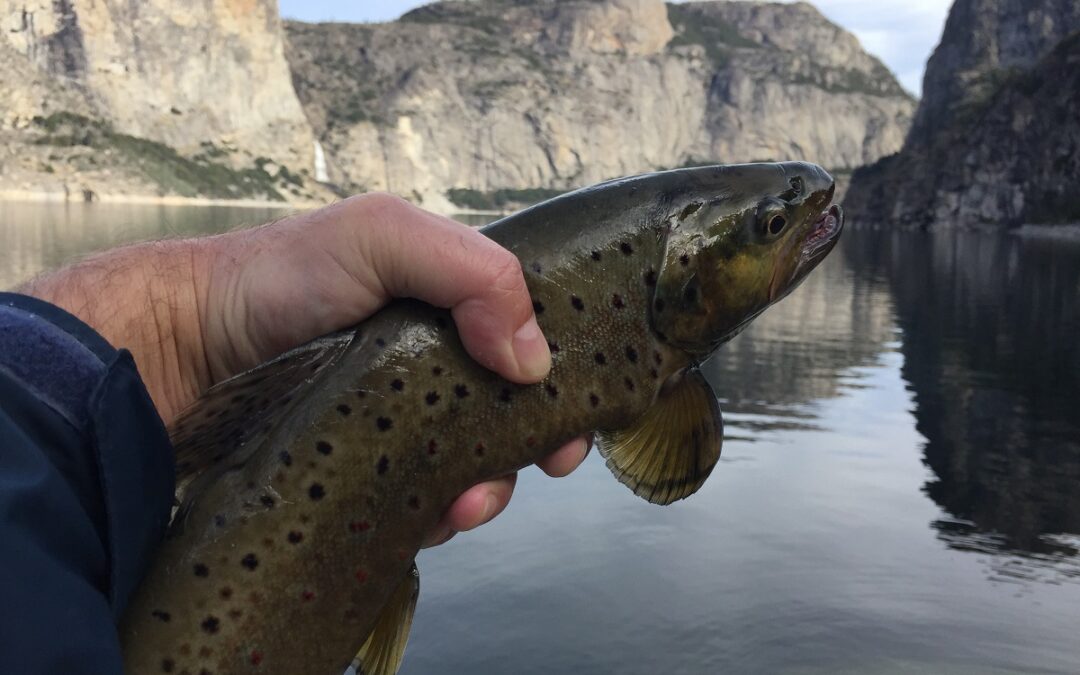
Last week, the National Park Service announced changes in fishing regulations throughout Yosemite, notably including opening Hetch Hetchy Reservoir to anglers. Hurrah!
Photo: Phil Akers, MyOutdoorBuddy.com
Superintendent Ray McPadden explained “Visitors can now enjoy fishing throughout the year, including in areas like Hetch Hetchy, with regulations that are easier to understand and more consistent with state guidelines.”
Fishing the reservoir is clearly something Congress expected when it passed the Raker Act, authorizing its construction a century ago. The change is most welcome, coming almost exactly two years after we joined with 24 organizations and businesses to urge the Park Service to allow fishing at Hetch Hetchy. It is always great to work with partners:
Aspen Outdoor Management Services ◊ California Sportfishing Protection Alliance Echo Cooperative ◊ Evergreen Lodge, Rush Creek Lodge & Firefall Ranch ◊ Fly Fisherman Magazine ◊ Friends of the River ◊ Merced Fly Fishers ◊ Nesporado Fly Fishing ◊ Northern California Council, Fly Fishers International Pasadena Casting Club ◊ Restore Hetch Hetchy◊ Santa Barbara Fly Fishers ◊ Santa Cruz Fly Fishing Club ◊ Sierra Nevada Alliance ◊ Sonora Fly Company ◊ Stanislaus Fly Fishers ◊ Tight Line Therapy ◊ Trout Unlimited ◊ Trout Unlimited Central Sierra Chapter ◊ Tuolumne River Trust ◊ Yosemite Fly Fishing ◊ Yosemite Fly Fishing Guides ◊ Yosemite Adventure Guides ◊ Yosemite Outfitters
This previous Compendium language was deleted: Public access is prohibited below the high water mark of Hetch Hetchy reservoir, an elevation of 3796 feet (see the High Water Mark map in the appendix). This includes a prohibition on bathing, swimming within 1 mile of any tributary directly flowing into the reservoir. This restriction is necessary to maintain the high quality of water found in the Hetch Hetchy Reservoir as a clean municipal drinking water source free from microbial pathogens and other contaminants.
This language was added to the new Compendium:
Fishing from the top of O’Shaughnessy Dam is prohibited.
Visitors engaged in fishing at Hetch Hetchy Reservoir must limit bodily contact with water. Wading, swimming, or other bodily contact with the water (other than using one’s hands to retrieve or release fish) is prohibited.
Many anglers will still prefer stream fishing to reservoir fishing. Others will be drawn to this new opportunity, wondering what fish and what size of fish might be lurking in the water.
If you fish the reservoir, let us know – and send pictures. And please, while fishing Hetch Hetchy and elsewhere, be good stewards: obey the law and do not leave anything behind.
At Restore Hetch Hetchy, we are pleased as punch that fishing is allowed – now all 38 of California’s reservoirs which hold more than 200,000 acre-feet of water allow fishing.
We are far from done advocating for improved access at Hetch Hetchy (as we also advocate for the reservoir’s relocation and the valley’s restoration). Hetch Hetchy is still the only of these large reservoirs that does not allow boating – the reason is not water quality as the Compendium states but management concerns and perhaps San Francisco’s opposition. There is also still the issue of allowing camping at Hetch Hetchy as well as improving trails.
But let’s take a moment to savor progress to date and thank the National Park Service for listening!
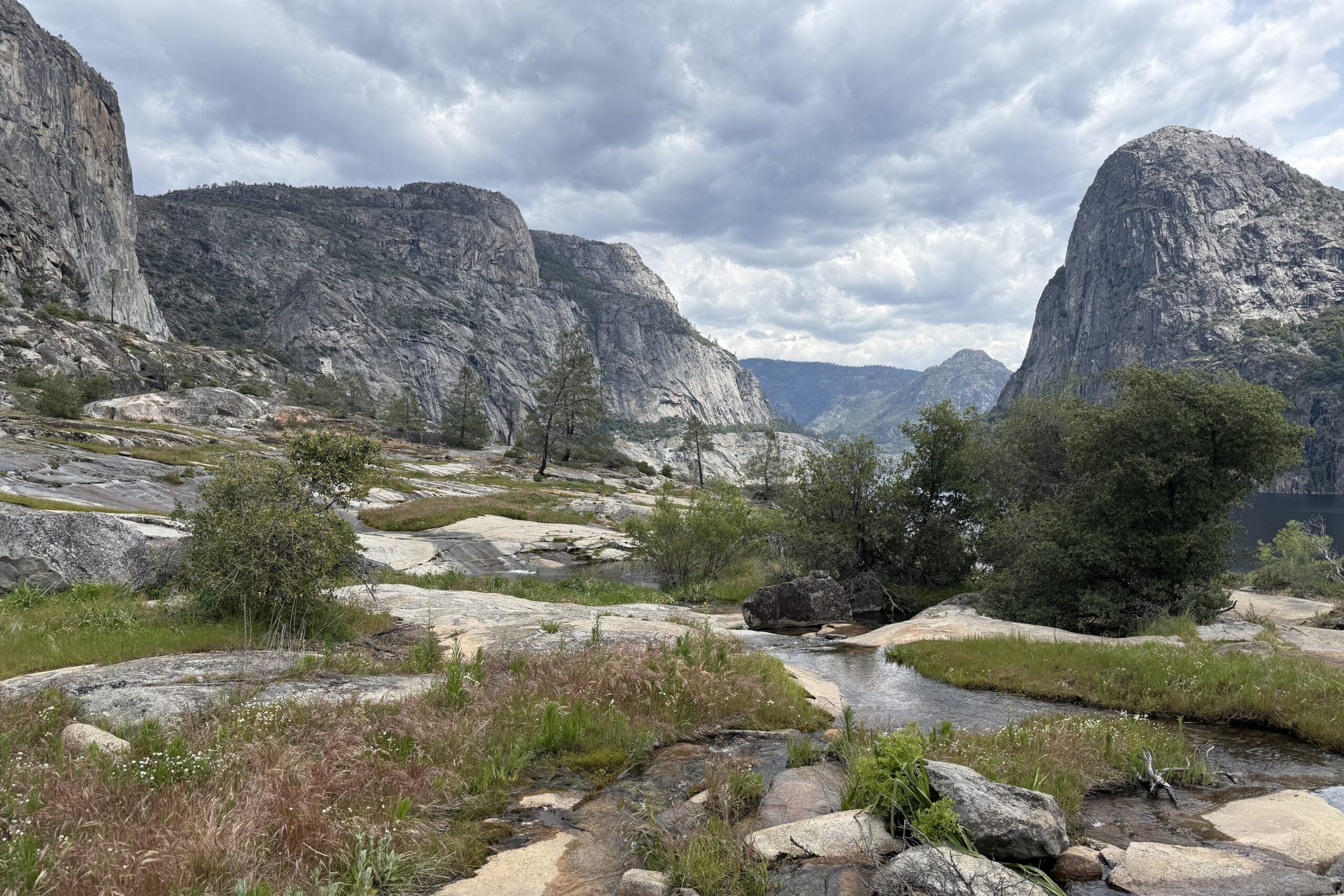
Photo: Roger Williams, Restore Hetch Hetchy Board Chair. Click herefor high resolution version.
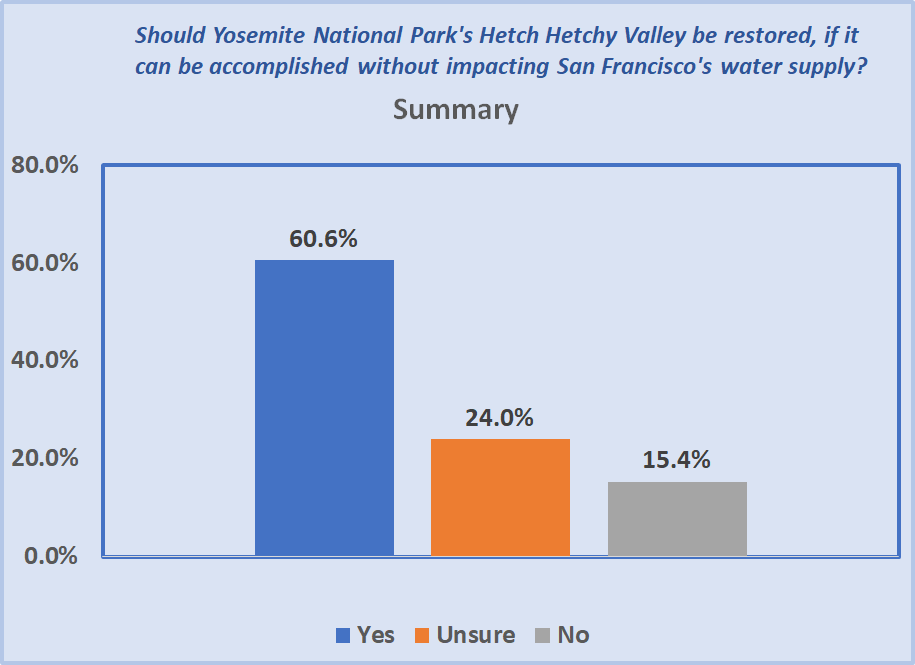
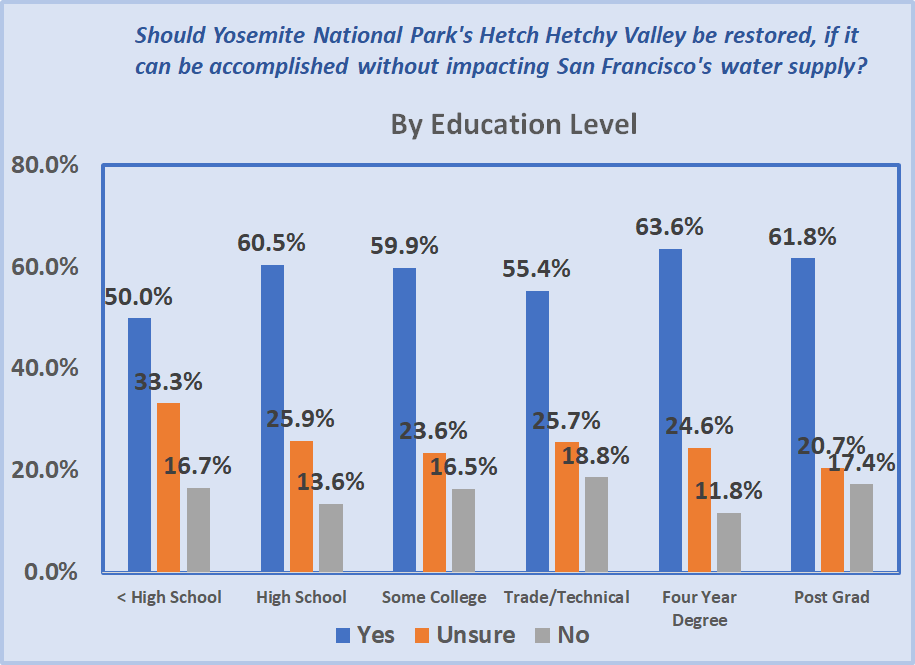
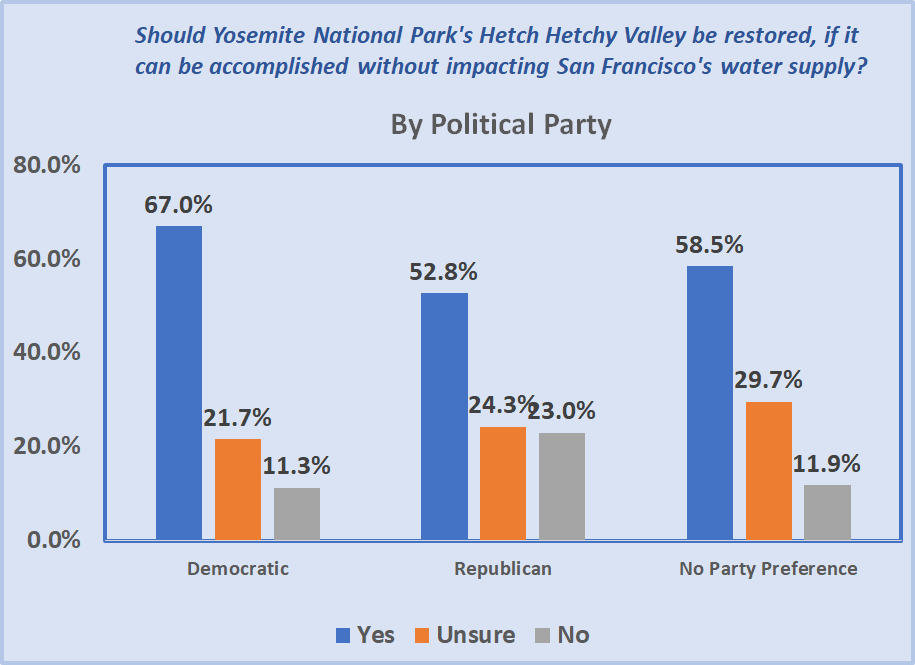
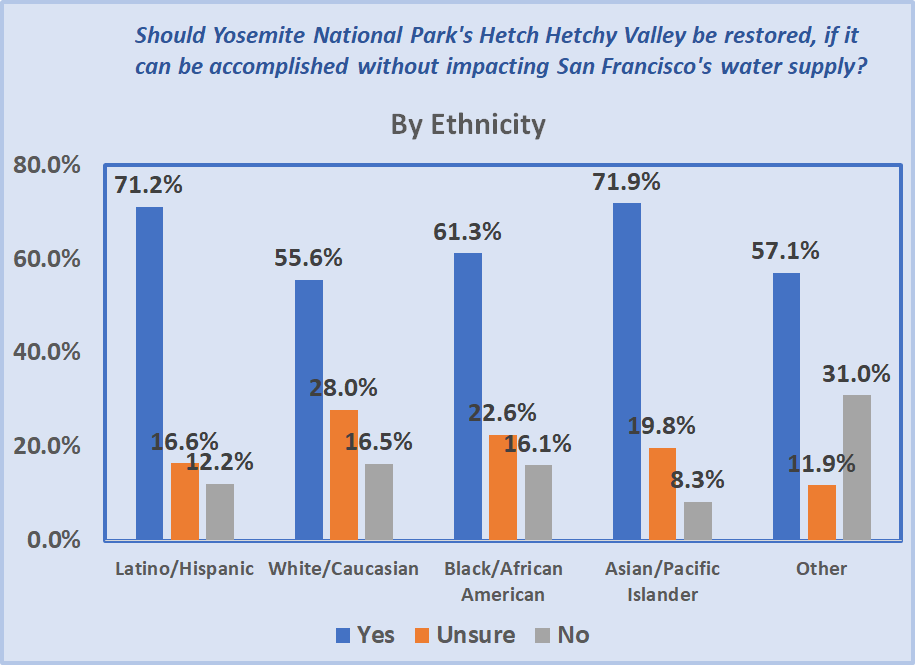
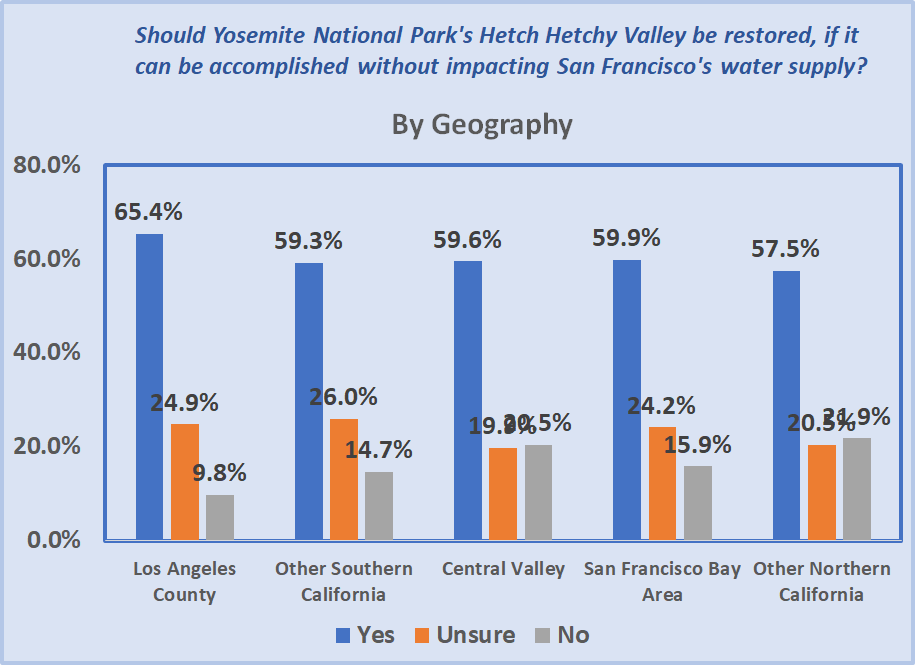
We asked Probolsky Research to add a Hetch Hetchy question to a statewide poll conducted in early May – the very same question we asked in 2019. We like the results!
Restoration supporters outnumber opponents by almost 4 to 1!
Our challenge is to convert this broad public support into support among our elected officials. We will be sure to share these results.
The question was preceded by a brief explanation, and asked as shown below:
Question: California’s Yosemite National Park once included two glacier-carved valleys – Yosemite Valley along the Merced River and Hetch Hetchy Valley along the Tuolumne River. In 1913, Congress allowed San Francisco to dam Hetch Hetchy Valley and turn it into a reservoir for the City.
Should Yosemite National Park’s Hetch Hetchy Valley be restored, if it can be accomplished without impacting San Francisco’s water supply?
We asked the question with a bit of trepidation. How might people respond? Are they still positive about the visionary opportunity for restoration? Or are people in sour moods, perhaps after following a series of generally negative gubernatorial debates which have dwelt on serious challenges that California faces. Would respondents still favor the positive vision of returning Hetch Hetchy Valley to its natural splendor?
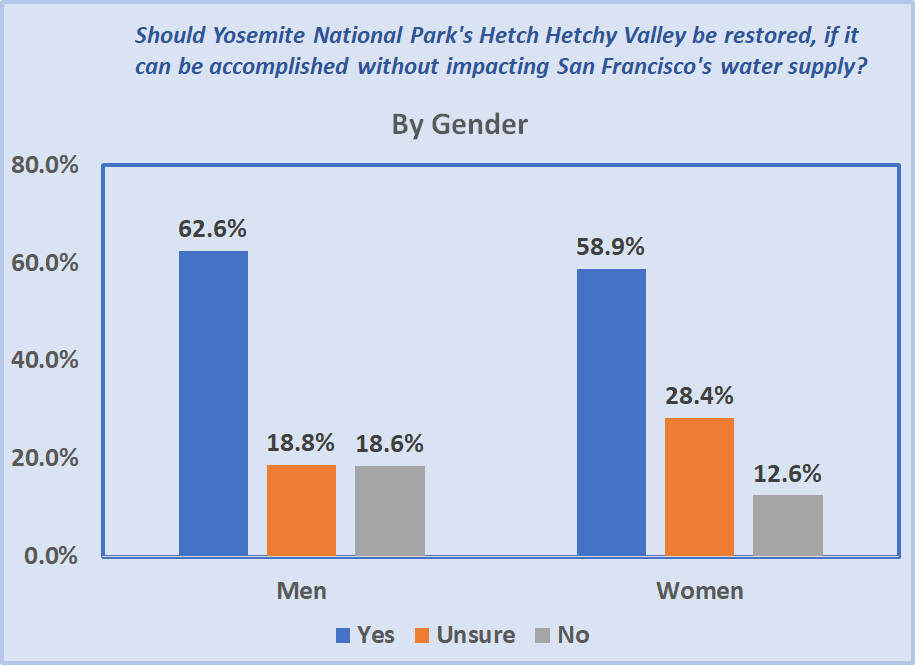
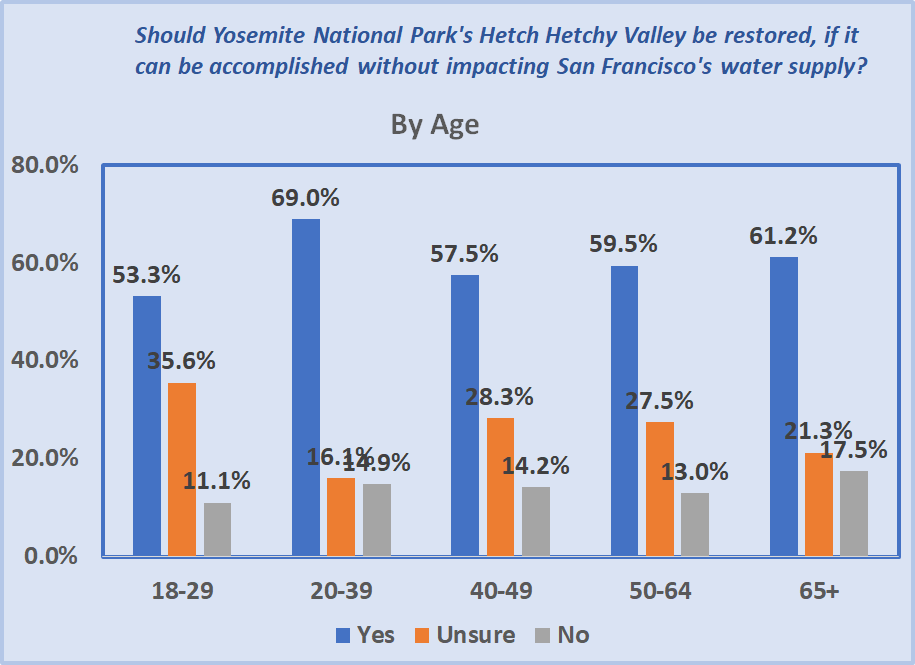
Our fears were assuaged. Every demographic measured by the Probolsky folks support restoration, with relatively little variation.
The results are very similar to what respondents said in 2019. More than 60% of California’s population continue to favor restoration. The most obvious overall difference is that fewer people are opposed to restoration, and instead say they are unsure. Another interesting difference is that the 2026 results did not indicate a dip in support in the Bay Area as had been the case in 2019
Probolsky’s reports are posted online for both 2026 and 2019.
For breakdowns by gender, age, education level, political party, ethnicity and area, see charts below.
We plan to encourage elected officials to take action over the next several months. As part of our effort to show broad support, we have posted a simple petition on our website. Please take a moment to sign – and ask your friends to do so as well (they can select whether or not they want to be added to our list for updates).
If you need any encouragement, check out (again perhaps) Libby McLaren’s phenomenal and stirring version of Bill Oliver’s “Hooray for Hetch Hetchy.” Libby is a proud graduate of Berkeley’s John Muir Elementary – class of ’67.
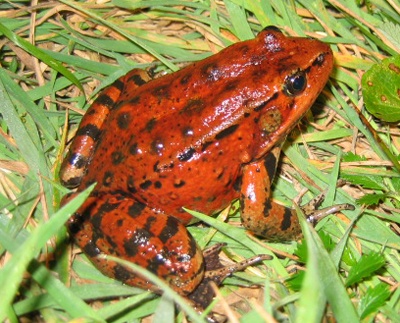
One last thing. Great news. The endangered California red-legged frog has made a strong comebackin Yosemite and may soon be introduced in the Hetch Hetchy area.
The California red-legged frog – photo Jamie Bettaso USFWS
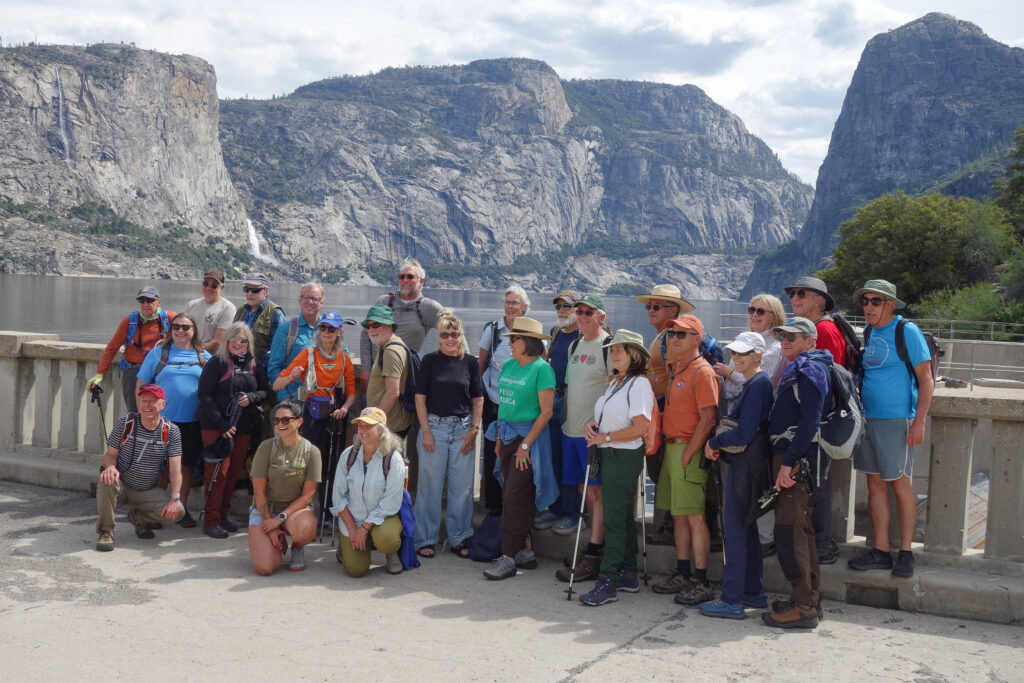
Visitors flocked to Hetch Hetchy last weekend as they did to all of Yosemite National Park. Long waits at entrance stations and full parking lots frustrated visitors. Many have called for a return of a reservation system to manage crowds during periods of peak demand.
Parking at Hetch Hetchy was full by 12:30. Fortunately, our entourage met at 10:30 and had a brief discussion at the dam before heading out to Wapama Falls.
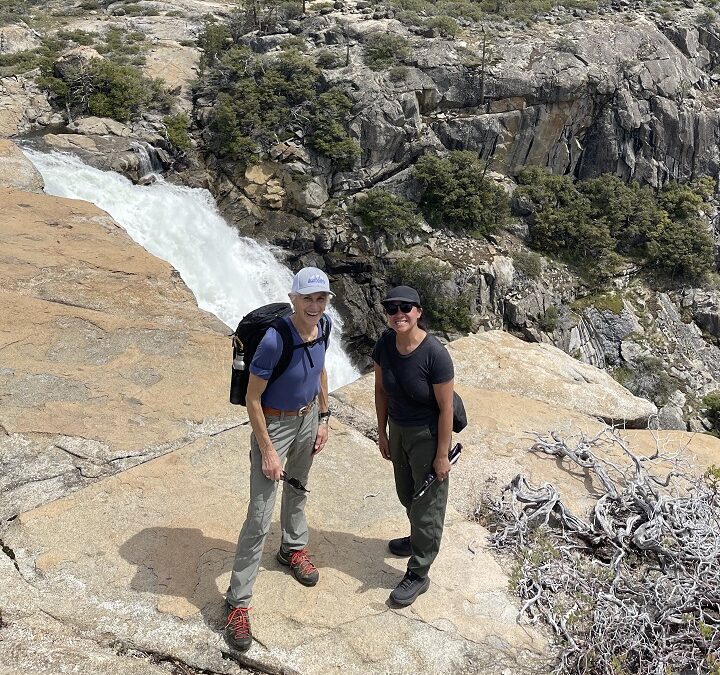
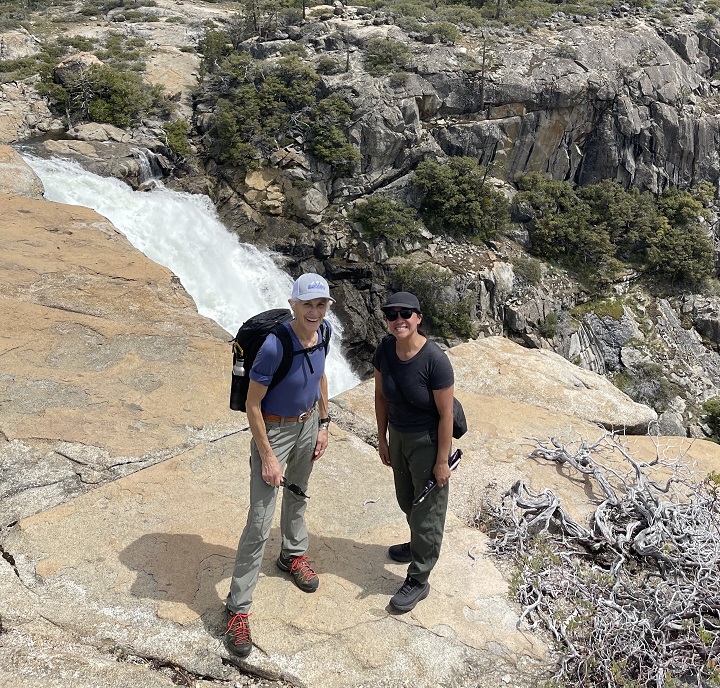
We saw more folks on the trail to Wapama than ever. It was warm enough that the icy spray from the falls was most welcome. Some of our group sought more adventure, and went down to Poopenaut Valley or up to the top of the canyon above Tueeulala and Wapama Falls. Photo Alice Chung
Wapama Falls from above. Access requires off trail hiking, making the journey challenging but ever so rewarding.Photo Lucho Rivera
At Restore Hetch Hetchy, we don’t anticipate restoration will substantially reduce crowding in Yosemite Valley. It will help some.
Returning Hetch Hetchy to its natural splendor will, however, provide a glorious alternative that will welcome visitors to a valley with less infrastructure and congestion. Reasonable people will debate passionately how best to manage visitor use in a restored valley. We can’t wait for that discussion, but first we have a reservoir to relocate.