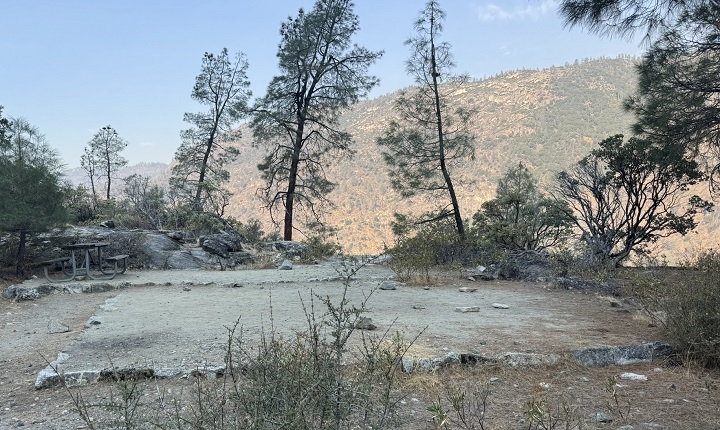
A quick walk through the campground at Hetch Hetchy last weekend showed no one camping at any of the 21 sites. Zero. Nobody.
Group Campsite A – a little shade would be nice for starters.
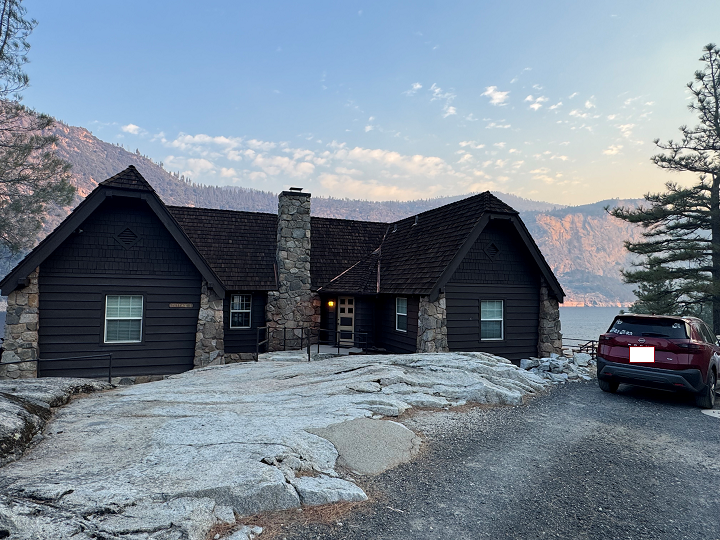
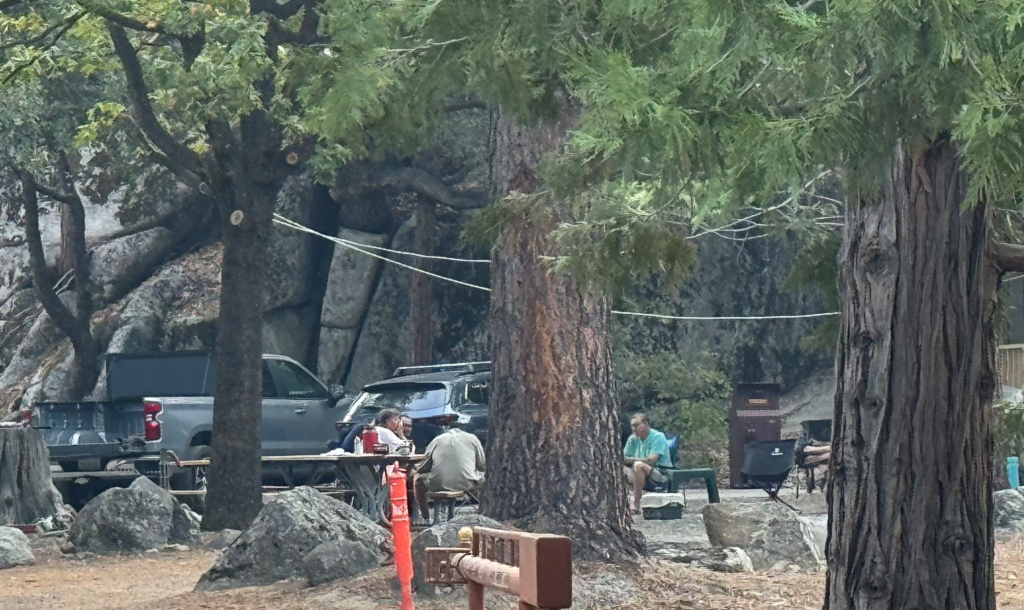
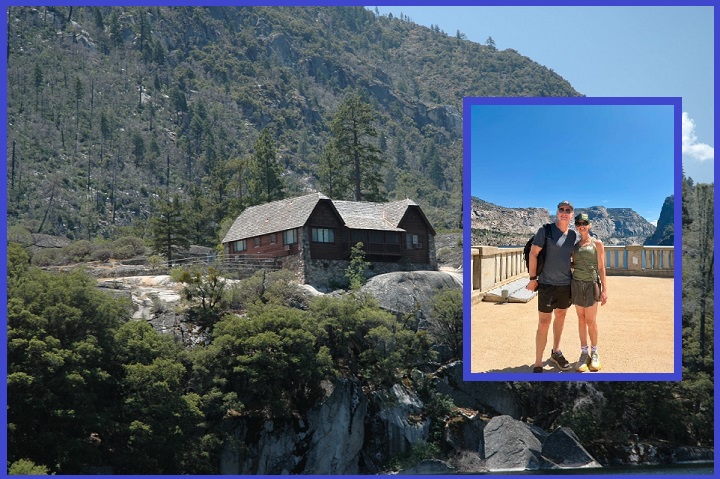
Meanwhile, a fair crowd of elite San Franciscans was staying at the Chalet overlooking the reservoir and nearby cabins. A boisterous group was laughing and drinking coffee while they were waiting for the sun to rise over the spectacular canyon walls.
The Chalet was built in the 1930s, hoping Franklin and Eleanor Roosevelt would stay on their visit to Yosemite. Perhaps it could better serve the public as a National Park Service visitor center.
The men laughing and drinking coffee outside the bunkhouse were a stark contrast to the empty campsite. Why can’t all park visitors have the same opportunities?
There are a number of reasons why the campground is empty:
Camping is only allowed if you are leaving for or returning from a backpacking trip.
There is no potable water available at the campground.
While the views are nice, there is little shade at the campground.
Next year, when San Francisco provides potable water to the campground (114 years after being required to do so by the Raker Act), the National Park Service should allow all visitors to use the campground. We also encourage NPS to solicit public funds to upgrade the campground to the same standards as elsewhere in Yosemite.
It’s also clear Congress never intended that San Francisco be allowed recreational use of cabins at Hetch Hetchy. (The Raker Act states any City buildings must be associated with construction and operation of the dam. A quick perusal of the publicly available guests lists shows most visitors are there as privileged tourists and not involved with the operation of the dam.)
Of course, we believe the reservoir has no place at Hetch Hetchy. Relocating the reservoir, however, will likely require an act of Congress – hopefully in cooperation with San Francisco. Until that takes place, the least the National Park Service can do is provide improved and equal access to Hetch Hetchy for all visitors.
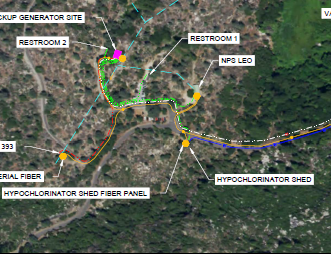
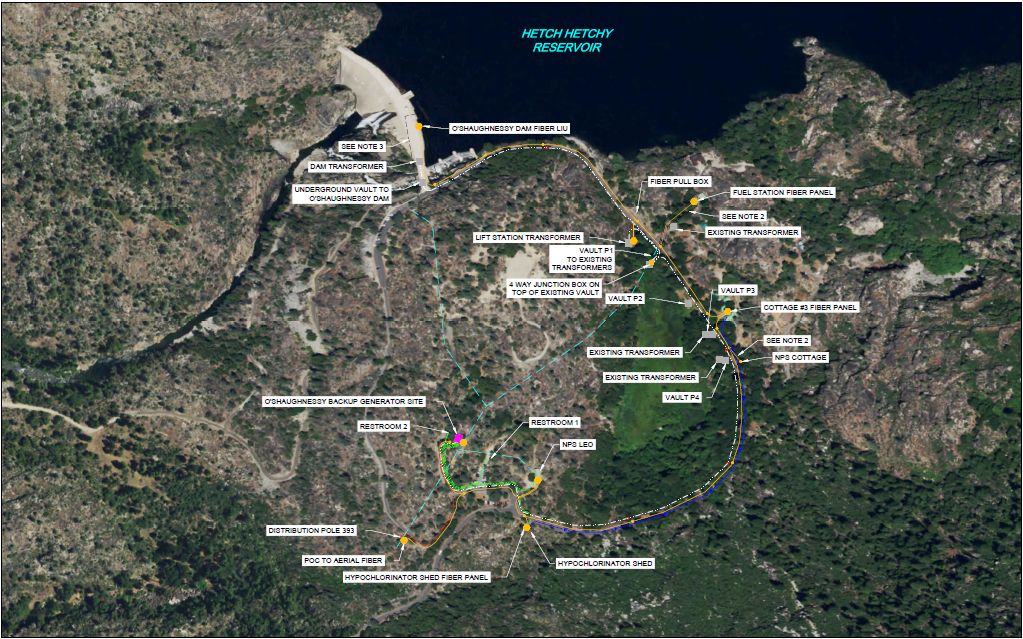
Hooray! San Francisco is now soliciting contractors to provide potable water to the campground at Hetch Hetchy. Construction is scheduled for August 2027.
Potable water was a requirement when Congress passed the Raker Act in 1913. Somehow both San Francisco and the National Park Service managed to ignore this requirement for 110 years – until Restore Hetch Hetchy reminded them in 2023. For more background, see “progress-good-and-sufficient-supply-of-water-for-camp-purposes-at-last”– posted a year ago.
One image from San Francisco’s extensive files for prospective contractors. Click photo to enlarge.
When the project is completed, we have asked the National Park Service to allow all visitors to stay at the campground – not merely those leaving for or returning from a backpacking trip. NPS has not made any such commitment. (Note San Francisco intends to install fiberoptic cable as well, which NPS has said will improve security.)
San Francisco’s elite guests are permitted to stay at its Chalet overlooking the reservoir and adjacent cabins. While these structure are intended for activities “necessary or properly incident to the construction, operation, and maintenance of said water-power and electric plants: (Raker Act Section 1), most use is clearly recreational for the City’s guests.
Governor Newsom visited Hetch Hetchy earlier this summer and we are told they stayed at the Chalet.
Restore Hetch Hetchy’s fundamental campaign is to restore the valley while making water system improvements so that no one loses a drop of supply. It is also essential, however, that visitors are welcomed at Hetch Hetchy. Providing potable water to the campground is an important part of improving the visitor experience and something to celebrate.
On Wednesday, the House Subcommittee on Water, Wildlife, and Fisheries held a hearing considering eight proposed bills. Some were relatively noncontroversial. A Florida bill that would allow destruction of wetlands and the killing of wildlife, including manatees, raised serious concerns.
Rep. Jared Huffman, the ranking Democrat on the Subcommittee, spoke in favor of recreation and access but noted there needed to be balance without further explanation. He also opined that he wished the National Park Service had been invited to testify.
Huffman also took a moment to criticize the administration’s proposed land swap on the western edge of Yosemite. Rep McClintock announced he too was opposed and called the proposal “idiotic”. It was nice to see the two gentlemen agree.
McClintock explained San Francisco’s sweetheart deal dated back to the Raker Act of 1913. He sharply criticized the minimal rent ($30,000) that the city pays as well as the inability to swim, boat and camp at Hetch Hetchy. He acknowledged that San Francisco would need to filter its water, but that doing so is no different from what every other water agency does.
Brett Barbre, General Manager of the Yorba Linda Water District, testified in support of the bill. Barbre explained that the bill would provide a recreation benefit that is “consistent with every other major reservoir in California and the west” and opined “Hetch Hetchy should be treated no better and no worse than any other system.” Barbre said San Francisco was “hostile” to improved recreation and further added that he agreed that San Francisco’s rent of $30,000 should be raised.
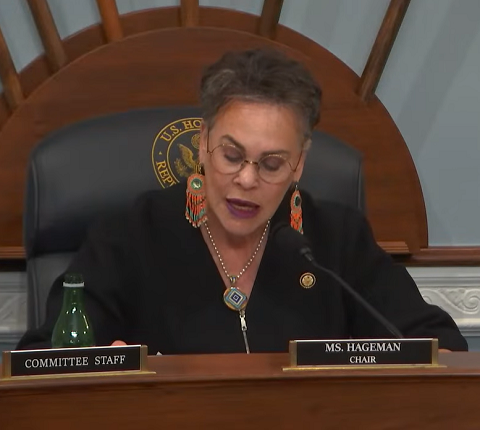
Chair Hageman encouraged Barbre to expand. They both opined that the proposed rent increase to $2,000,000 was too low. Hageman closed the conversation by saying that H.R. 177 was a good bill.
We agree with pretty much everything said by Hageman, McClintock and Barbre, even though none of them are likely to support our end goal of restoring Hetch Hetchy valley to its natural splendor.
Passage of H.R. 177 would indeed provide significant benefits to park visitors. Further, we believe that greater appreciation of Hetch Hetchy will help build even more support for elimination of the reservoir. We would like to see the bill pass, but note it is being heard very late in the session and is unlikely to make it through both houses. Still, we will cross our fingers.
The House Natural Resource Committee will hold a hearingnext Wednesday September 16 (7 AM Pacific Time!) on a number of bills, including Rep. McClintock’s “Yosemite National Park Equal Access and Fairness Act”.
This bill was introduced more than 18 months ago. At the time, we wrote to Rep McClintock, encouraging him the pursue improved access and recreation and provided a plethora of documents in support. See https://hetchhetchy.org/access/.
We are a little surprised that the bill has suddenly reemerged. The text of his bill at this time remains incomplete. The devil is in the details as they say – we look forward to learning more.
Issue #15 of Trails Magazine includes “Yosemite Valley’s Secret Twin”, a wonderful eight page article about Hetch Hetchy covering our efforts both to restore the valley and to improve access and recreation.
Trails Magazine is old school. Their articles are not posted online. But describing Trails as a “magazine” does not do it justice. Every issue is more like a book for your coffee table, beautifully presented with in-depth articles and exquisite imagery to savor and to impress readers. It’s a truly impressive publication and we are thrilled to be included in this most recent issue.
Author Nora Neus, an extraordinary Emmy-nominated producer, writer, and freelance journalist, did extensive research for Yosemite Valley’s Secret Twin over several months.
The article includes interviews with former Yosemite Superintendent Dave Mihalic, Restore Hetch Hetchy Executive Director Spreck Rosekrans and Board Members Lucho Rivera and Mecia Serafino, as well as worthy adversary Adrian Covert of the Bay Area Council.
To read the full article, you’ll need a subscription. Below are a few highlights.
Restoration
Discussing water supply, Neus gives a nod to our Cherry Solution report, echoing our finding that connecting the nearby Cherry Creek Reservoir to San Francisco’s conveyance system would more than serve the region’s growing population. She also notes the results of last spring’s independent statewide poll: Public opinion is on their side. A poll conducted by Probolsky Research in May found that 61% of California voters support restoring Yosemite’s Hetch Hetchy Valley, with the important caveat, “if there’s no impact to San Francisco’s water supply.”
We have had extensive discussion of the Cherry Solution with many Congressional offices, albeit none with San Francisco. We stand by the report’s findings and welcome independent review of it and other proposed water and power system improvements.
Neus takes obvious pleasure in quoting Executive Director Spreck Rosekrans, a former high school teacher, “I used to teach calculus to high school students and now I teach arithmetic to politicians.“
Recreation
The article begins by imagining how Rosekrans would like to explore Rancheria Falls by first kayaking across the reservoir. Golden light would slant off the majestic Hetch Hetchy Dome as mist rises off the water. He’d dip his paddle into the still, cool water and pull himself to the far side, where he’d hike about an hour up to Rancheria Falls. The waterfall is otherwise only accessible via an arduous 14-mile hike that he just doesn’t have in him anymore.
Neus explains the restrictions that are all too familiar to many of us: That means no kayaking, no rafting, no swimming, no wading or even touching the water, and certainly no power boating. In California, 37 of the 38 reservoirs over 200,000 acre feet in volume allow recreation. Hetch Hetchy is the only exception. She does note that there is hope for continued improvements: Just this spring, park Superintendent Ray McPadden changed the rules to allow fishing in the reservoir, a major step toward allowing other types of recreation in the area. But after 118 years, will the no-recreation rule change? And if so, could the change pave the way to remove the dam entirely?
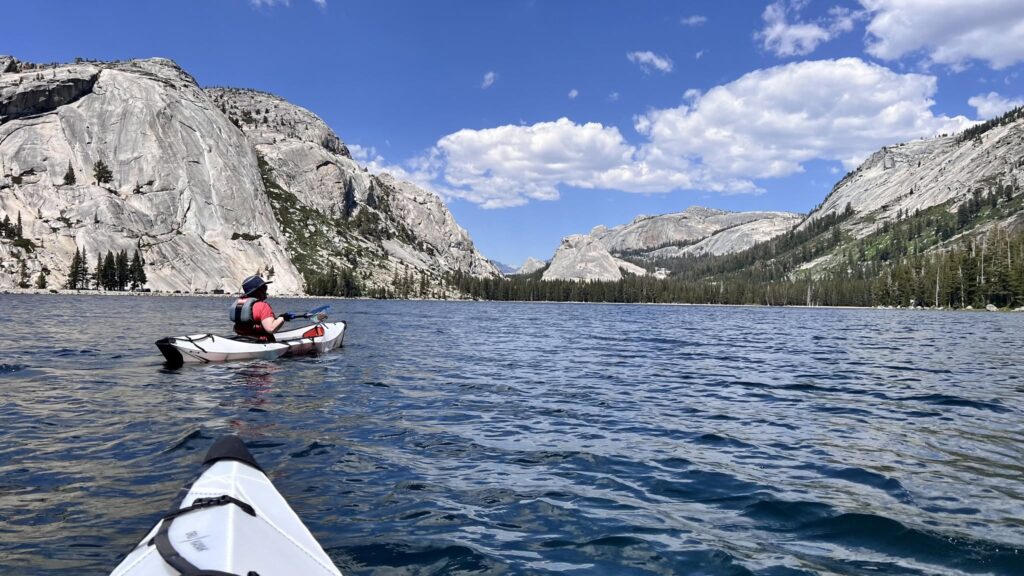
Kayaking is permitted at Tenaya Lake in Yosemite, so why not at Hetch Hetchy? (The Raker Act expressly precludes special consideration for any boating restriction at Hetch Hetchy.)
Politics
Neus interviews former Yosemite National Park Superintendent David Mihalic, who has long been disappointed that there are not more voices calling for restoration – he’s still frustrated by the modern environ-mentalist movement’s avoidance of this issue, in part in deference to local Bay Area politicians who are otherwise supporters of environmental causes.
Dave is not wrong, but we have had success getting support from many groups in recent months – stay tuned.“It’s a perversion of the whole national park idea,” he said of the Hetch Hetchy Reservoir. “I’ve understood why the so-called environmental groups … they just kind of glance over it and start whistling and turn away if the word Hetch Hetchy comes up.”
The article also includes a response from Adrian Covert, who manages water policy for the Bay Area Council. Spending that kind of money dismantling and replacing a perfectly well-operating water system at a time when affordability on utilities is taking people to the breaking point is just not a wise use of public money.
Amusingly, Neus describes the Bay Area Council as a “non-profit”. Perhaps it is in a narrow legal sense. But the Bay Area Council’s clientele incudes Google, Meta, Apple, and Bank of America – some of the largest for-profit companies in the world, any of which could fund restoration by searching under the sofa cushions for loose change.
By the way, we will be debating Adrian soon – October 13 at Manny’s in San Francisco. If you are in the area, please come join us.
And a big thank you to Trails Magazine and Nora Neus for excellent coverage of Hetch Hetchy – Yosemite Valley’s Secret Twin!
Perhaps Assembly Member Greg Wallis would like to be a champion for all of Yosemite.
61 California legislators, led by Greg Wallis (Riverside) have sent a letter to Secretary of Interior Doug Burgum opposing the proposed Yosemite land swap.
The letter notes the swap would be a favor to a private developer and that “Yosemite belongs to no one and to everyone.” Restore Hetch Hetchy agrees. We aren’t opposed to any and all land swaps, but this one does not appear to be in the public interest.
Further, the letter addresses Yosemite’s unique role in American and world history:
That principle is as old as Yosemite’s federal protection. In 1864, in the middle of the Civil War, President Lincoln signed the Yosemite Grant Act, setting aside Yosemite Valley and the Mariposa Grove of giant sequoias for public use and protection. It marked the first time the federal government set aside scenic land specifically for preservation and public use, and it laid the groundwork for the national park system that followed. What is being proposed now runs directly against that founding principle, more than a century and a half later.
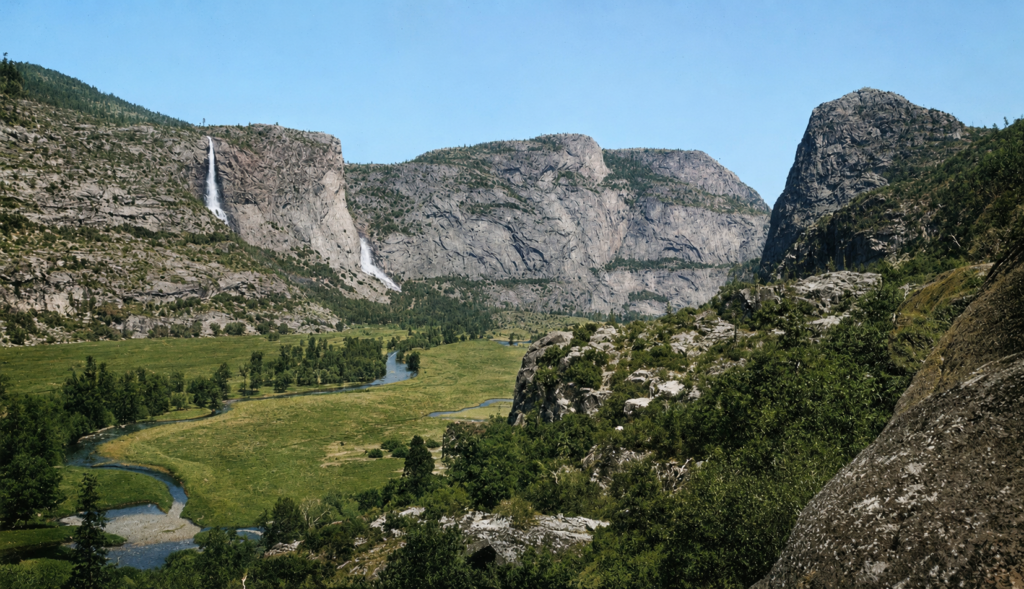
Hetch Hetchy from Sunrise Point – Photo Isaiah West Taber (enhanced)
One wonders how these legislators feel about the affront to Yosemite that took place in 1913, when Congress passed and President Wilson signed the Raker Act, allowing Hetch Hetchy Valley to be dammed and flooded. Are they and their colleagues in Congress aware that water system improvements are available that could obviate the need for Hetch Hetchy Reservoir? What state and national officials are willing to stand up and undo the historic injustice to Hetch Hetchy and Yosemite?
Restore Hetch Hetchy continues to talk to elected officials. Many seem to get it, but so far the silence is deafening.
Politicians are like weather vanes. Our job is to make the wind blow. – David Brower