The path to restoring Hetch Hetchy will be increasingly easier as San Francisco adapts its system for a future that includes both climate change and combining realistic levels of water from the Tuolumne River with other supplies. It starts by San Francisco understanding that its next water century will look nothing like the past. Last week’s court ruling may be a harbinger of such changes.
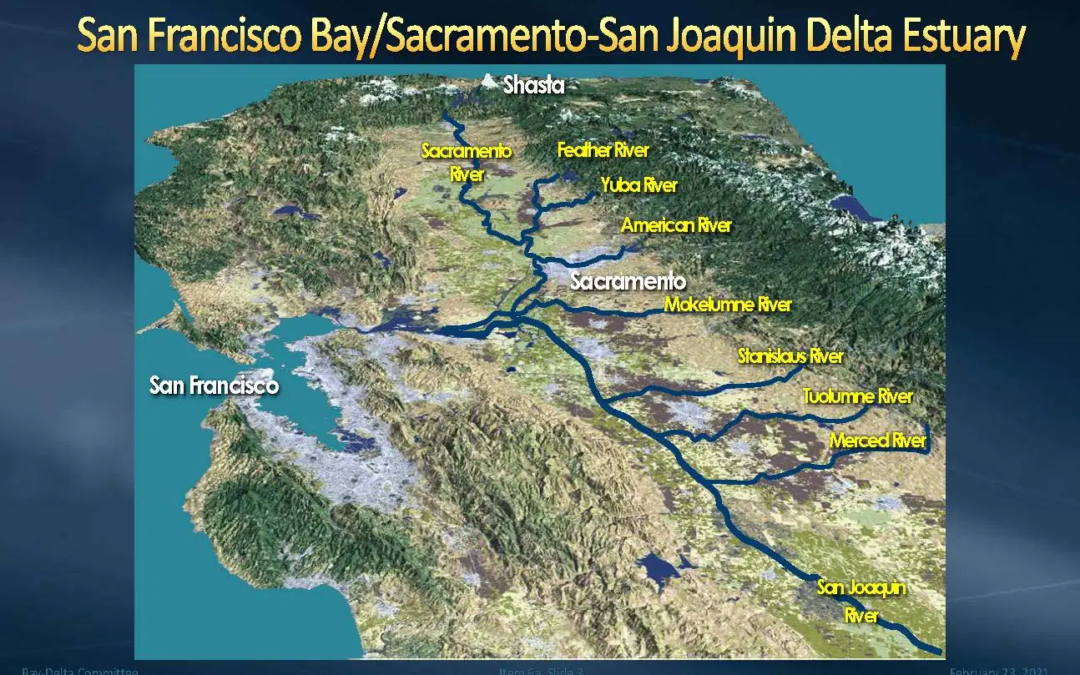
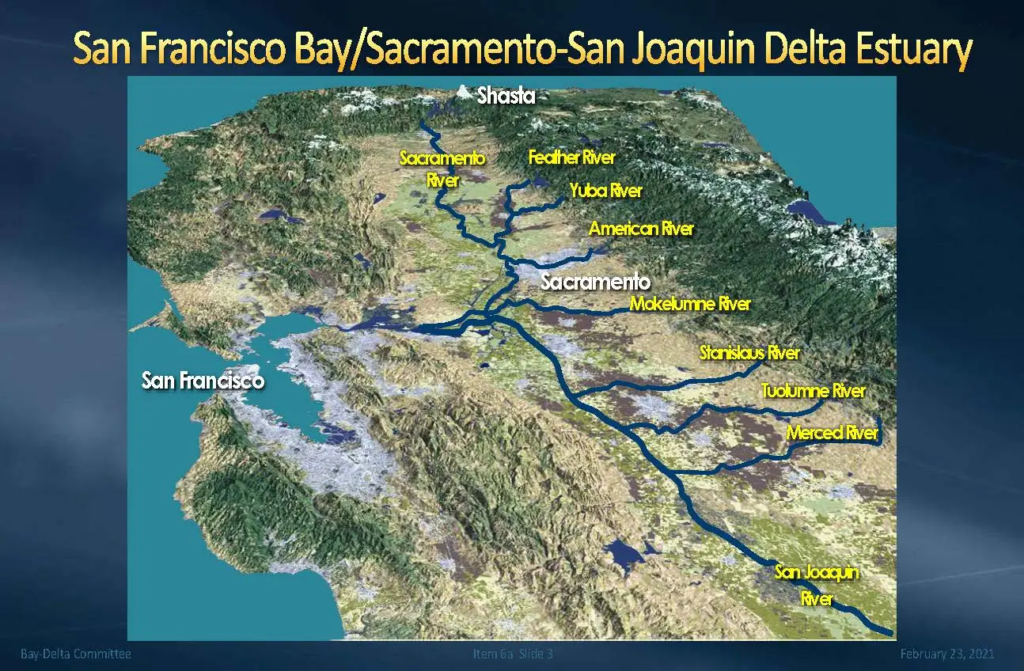
On March 15, Sacramento Superior Court Judge Stephen Acquisto ruled that the State Water Resources Control Board does indeed have authority to mandate improved river flows to benefit fish in Central Valley streams and in the Bay-Delta. (The San Francisco Chronicle article on the court ruling appears to be free – the Sacramento Bee article requires a subscription.)
The Bay-Delta Plan affects most water agencies in California. Our campaign to restore Hetch Hetchy affects only the San Francisco Public Utilities Commission and its customers in selected Bay Area cities.
The ruling, which applies to a dozen lawsuits and some 116 complaints, is the latest salvo in California’s long-running “water wars”. It is certain to be appealed.
Presently, the ruling gives the State Board additional leverage in negotiations over “voluntary agreements”. Water agencies have offered complex programs that include some improved flows combined with improvements in flood plain habitat, replenishment of spawning gravels, scientific monitoring etc.
It is important to understand that the State Board has authority only to mandate improved flows. It has no authority to mandate other measures but it does have the power to accept alternative proposals such as the voluntary agreements. It is fair to say the Newsom administration is advocating that the State Board accept the voluntary agreements. Environmental and fishing advocates strongly believe that flows are the key to improved fisheries and many have rejected the voluntary agreements.
The ruling has no direct bearing on our campaign to restore Hetch Hetchy Valley in Yosemite National Park – after all Hetch Hetchy Reservoir was authorized by (unprecedented) federal legislation. The ruling is, however, a warning shot, aimed at the San Francisco Public Utilities Commission and others, that old ways of doing business are changing.
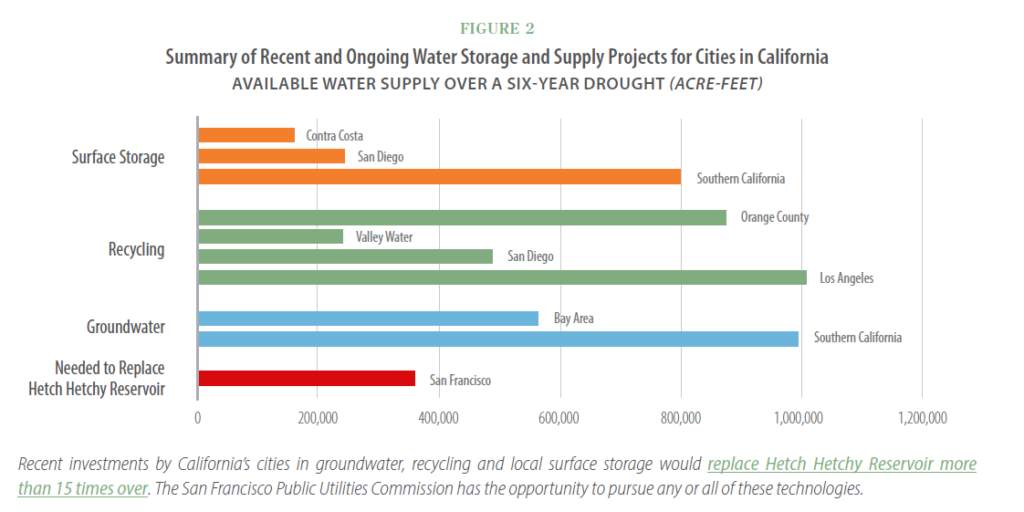
Most urban water agencies across California have indeed changed by sharply reducing their reliance on diverting water from far away reservoirs. As we pointed out in Yosemite’s Opportunity (2022), the San Francisco Public Utilities Commission, however, has changed little. While others have invested in recycling, groundwater and expanding local reservoirs, the SFPUC has resisted change.
Perhaps this latest court ruling will encourage the SFPUC to change willingly before change is thrust upon them. Such change will not only help fish downstream but can also make Yosemite National Park whole again by restoring Hetch Hetchy Valley.
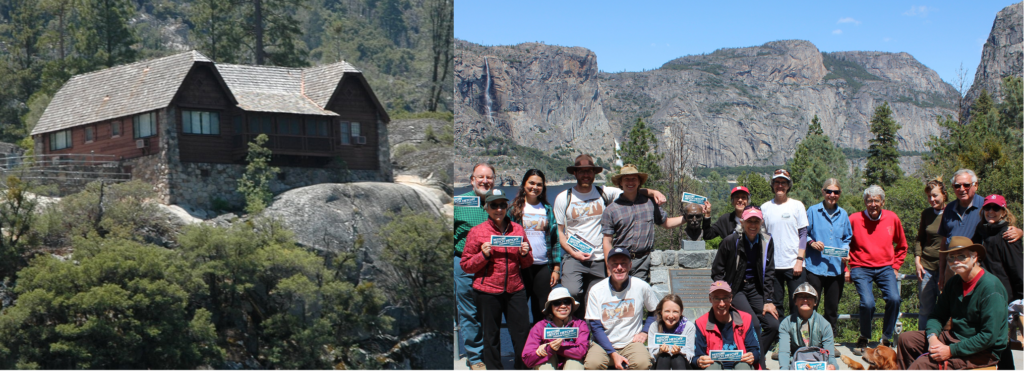
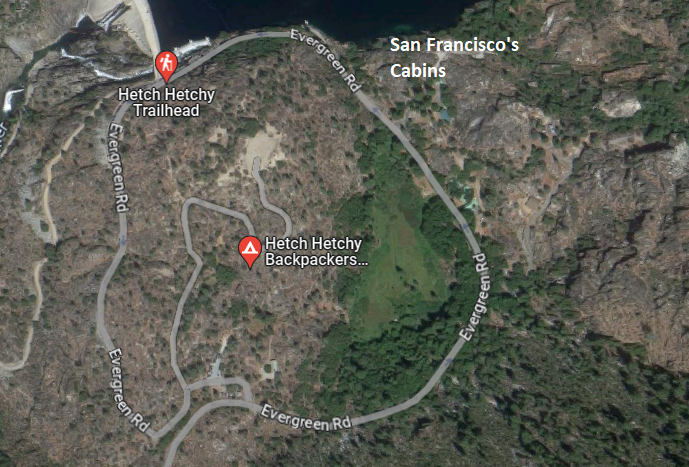
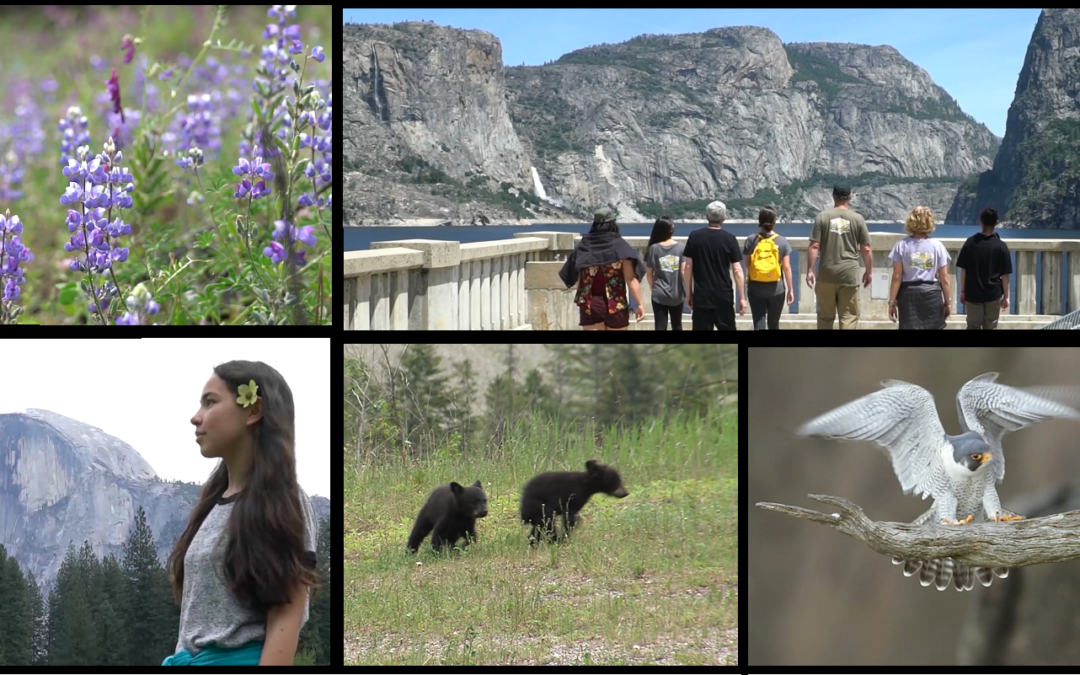
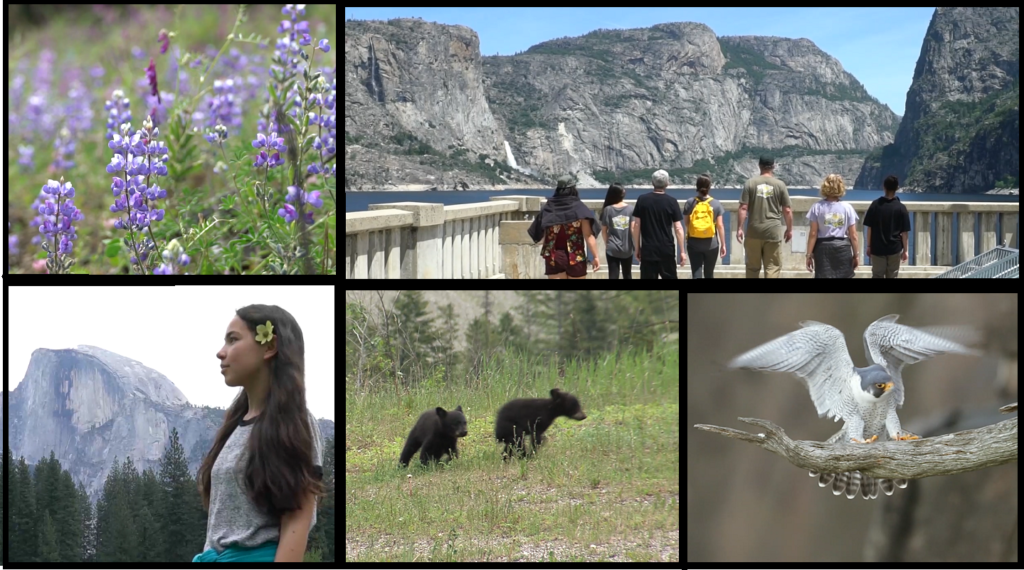
Only privileged guests of San Francisco are allowed to stay at the Hetch Hetchy “chalet” and its adjacent cabins, but its deck has provided a nice photo op for Restore Hetch Hetchy events.
The board, staff and supporters of Restore Hetch Hetchy are united by a common thread. We love Yosemite National Park – all of it, and we are committed to returning Hetch Hetchy Valley to its natural splendor. Moreover, Hetch Hetchy can be a new kind of national park, with limited development, an improved visitor experience, shared stewardship with native peoples, and permanent protection of its natural and cultural heritage for future generations.
San Francisco, collectively as a city and especially its Public Utilities Commission, loves Hetch Hetchy as well, but in a very different way. Its love goes back more than a century to its decades-long struggle to build a dam and reservoir. Ever since winning that battle, San Francisco has developed a sense of ownership of the Hetch Hetchy area and beyond – see, for example, the offering of lodging to City elites at cabins adjacent to the reservoir.
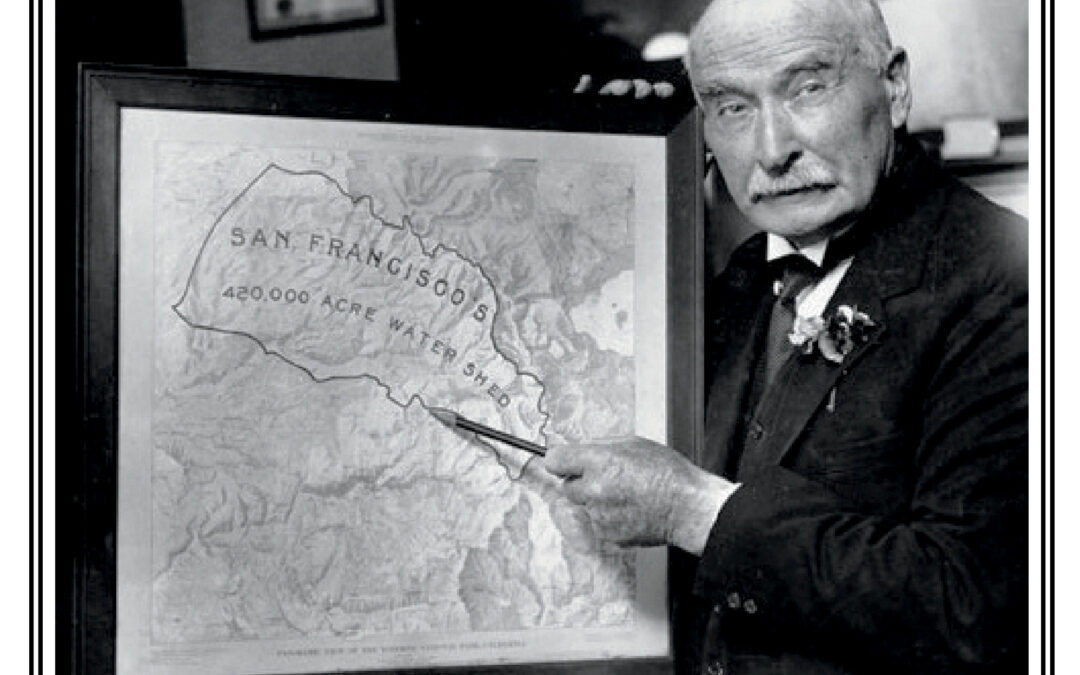
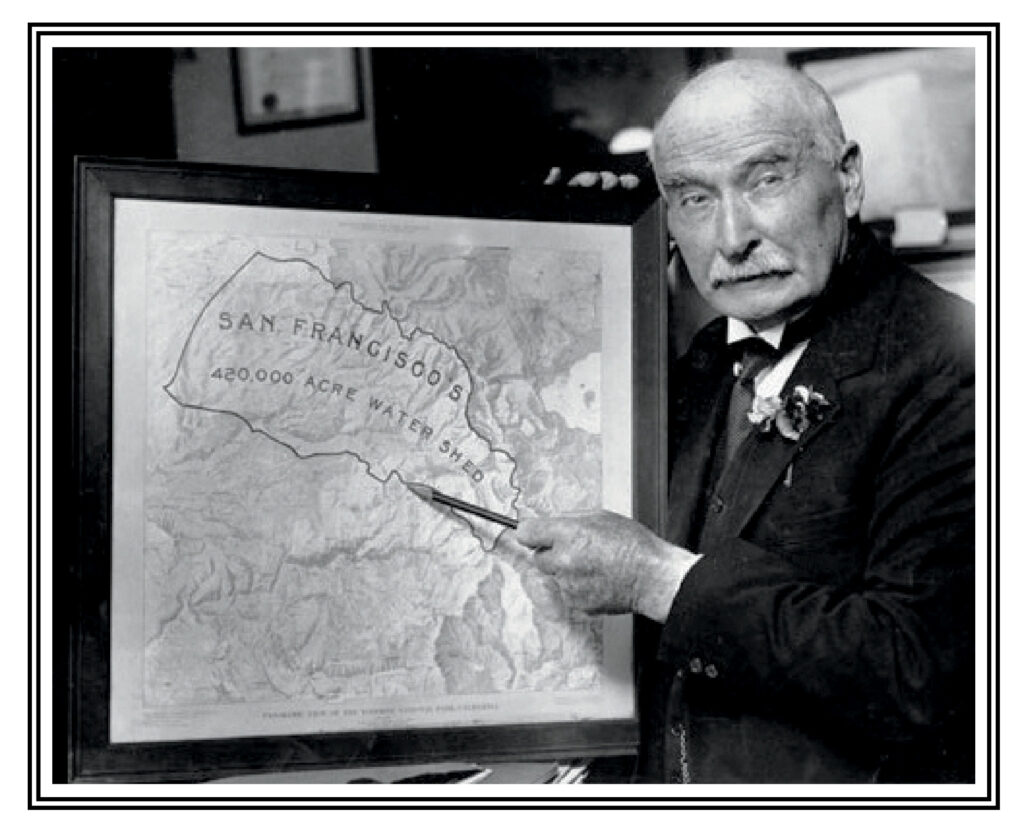
The Tuolumne River watershed covers more than one half of Yosemite National Park. Engineer Michael Maurice O’Shaughnessy describes it as belonging to San Francisco.
The National Park Service is caught in the middle of this love triangle. Officially, NPS staff members have no position on our view that the Raker Act must be modified and Hetch Hetchy Reservoir relocated (views expressed to us privately or from retired staff are uniformly pro-restoration).
The NPS is also caught in the middle when it comes to our efforts to improve recreation and access even while the dam and reservoir are in place. We’d like to see access and recreation improved at Hetch Hetchy. San Francisco seems to like it the way it is – with minimal visitation.
Camping, better trails, lengthened gate hours, boating, and public transportation etc.) will encourage visitors to know and love Hetch Hetchy as we do and ultimately to support the campaign for restoration. Restore Hetch Hetchy is working with the NPS to make improvements in these areas, consistent with the letter and spirit of the Raker Act (see Keeping Promises, Restore Hetch Hetchy, 2021).
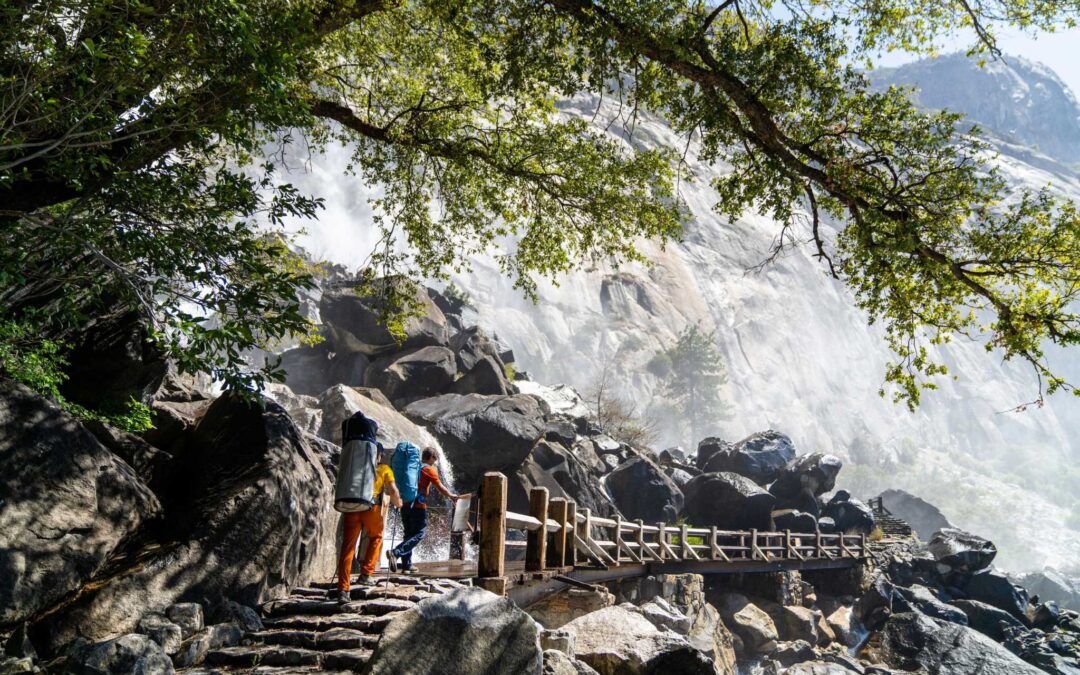
The NPS recognizes it has neglected Hetch Hetchy for more than a century. As we have noted, they are making improvements. The gate is open longer, potable water and sanitation will soon be available at the campground and there will be a new, safer bridge across the base of Wapama Falls. We also look forward to the repair of the boat ramp, although there is no indication at this time that boating will be allowed on Hetch Hetchy Reservoir as it is on Yosemite’s natural lakes.
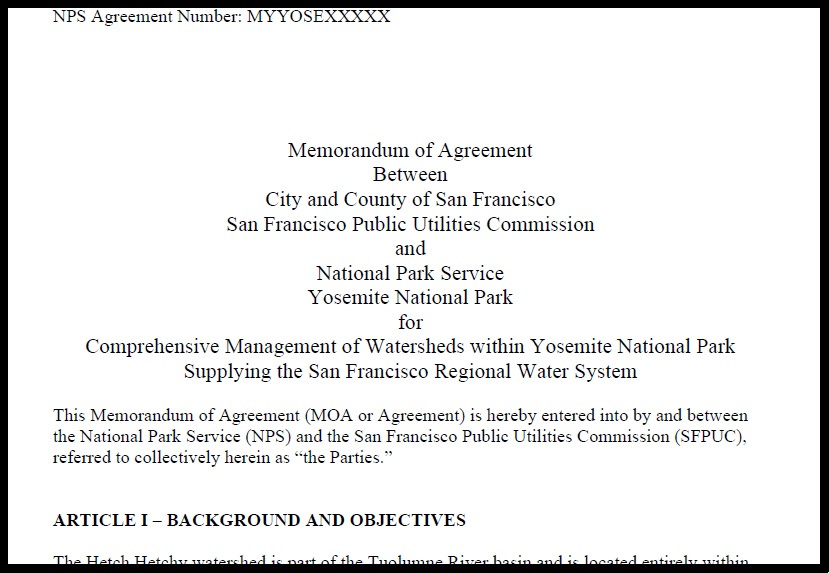
Even though the NPS agrees the visitor experience at Hetch Hetchy can and should be improved, San Francisco does not share this motivation. And importantly, the NPS is financially dependent on San Francisco for a significant part of their budget. While the Raker Act requires that San Francisco only pay $30,000 per year in rent, it also mandates that San Francisco reimburse the NPS for expenses related to “security” and “watershed protection” – expected to total $10,000,000 per year. This reimbursement is codified in a “Memorandum of Understanding” between the City and Yosemite, which is expected to be renewed later this year.
It’s appropriate that the NPS and SFPUC have such an agreement. As written, however, the MOA is problematic as it deviates significantly from the water quality protections included in the Raker Act. Notable are the MOA’s references, including an entire appendix, to the San Francisco Public Utilities Commission’s filtration avoidance. Unlike virtually all urban water supply agencies, San Francisco is not required to filter the 70% of system supplies that go directly from Hetch Hetchy Reservoir to customers (these water supplies are purified with chlorine, ammonia and ultra-violet light). This filtration avoidance, permitted by the California Department of Health Services, saves San Francisco the trouble and expense of enlarging its filtration plants in Sunol and Daly City.
But the Raker Act specifically states that protecting San Francisco’s filtration exemption is not NPS’ responsibility – indeed NPS is precluded from doing so.
Raker Act Section 9(a) Fifth. If at any time the sanitary regulations provided for herein shall be deemed by said grantee insufficient to protect the purity of the water supply, then the said grantee shall install a filtration plant or provide other means to guard the purity of the water. No other sanitary rules or restrictions shall be demanded by or granted to the said grantee as to the use of the watershed by campers, tourists, or the occupants of hotels and cottages…
The proposed new MOA is indeed an improvement over the existing MOA. At our request, language directly associated with the NPS commitment to filtration exemption was modified. (The existing version states that “A goal of the (joint) Source Water Protection Program is for the Hetch Hetchy water supply to maintain its filtration avoidance designation.”, while the proposed new version states more clearly that filtration avoidance is a goal of San Francisco without any reference to NPS.)
Restore Hetch Hetchy is pleased with this improvement but we don’t think it goes far enough. While the MOA does not include visitor restrictions, we believe its overzealous deference to San Francisco’s desire to avoid the expense of filtration may also be the impetus for the many restrictions to access and recreation at Hetch Hetchy that are not explained in public documents.
Given the specific language of the Raker Act, why does this joint document warrant mention of filtration avoidance at all?
Whether or not the new MOA is adopted, we will continue to remind the NPS that they are not permitted to restrict visitor activity at San Francisco’s behest beyond the specific limited provisions of the Raker Act.
Someday, the Raker Act will be modified so San Francisco will still have access to Tuolumne River supplies, but the water will not be stored in Yosemite National Park. At that time, San Francisco will still love the Tuolumne River and we can all love Hetch Hetchy and Yosemite as they should be.
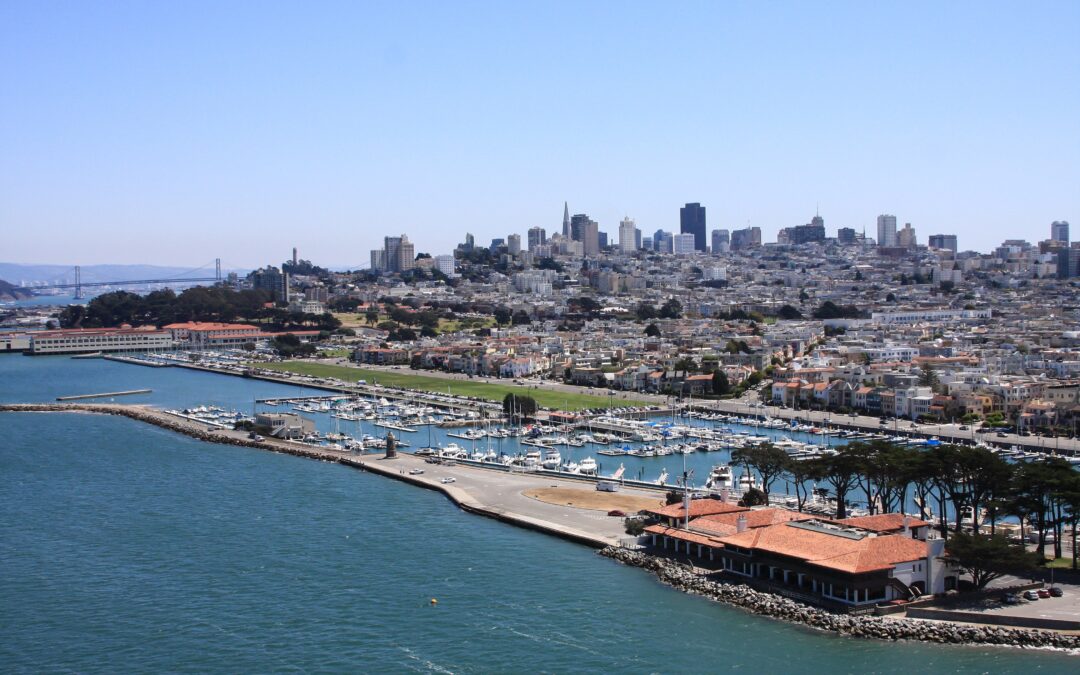
We appreciated the opportunity to make a lunchtime presentation at the St. Francis Yacht Club in San Francisco earlier this week. The audience was engaged and receptive, both during after the presentation.
They’ve posted the presentation online (see video below). It’s an hour long, including Q & A. If you have time, please check it out.
We have made a great many presentations over the years – often alone, and sometimes in a debate format. We’ve spoken to schools, conservation groups, water utilities, social clubs – most anyone who wants to listen.
Speaking in San Francisco is always a little different. For many of the City’s residents, “Hetch Hetchy” is synonymous with water itself, and there is often a strong historical & emotional tie to their best-known reservoir. One member told me that she typically asks for “Hetch Hetchy water” when she goes to a restaurant. I’d been forewarned that some members were less than enthusiastic that our campaign for restoration would be discussed at their club, but there was no overt opposition.
Some members were clearly intrigued. Others asked tough questions, belying skepticism. The presentation and especially the Q & A were primarily focused on necessary water improvements. By contrast, when we speak in the East Bay, Sacramento or southern California, people are more likely to ask about how visiting Hetch Hetchy will compare with visiting Yosemite Valley.
Anyhow, when you have a chance, relax with your favorite beverage and check out the video. Let us know what you think – and feel free to reach out if you’d like to schedule a presentation for a group in your area.
The optimist say the glass is half full, while the pessimist says it is half empty. Choose one or the other if you must, but the glass is filling up.
We’ve heard separately from the National Park Service and San Francisco that the City is funding several visitor improvements at Hetch Hetchy, including:
Providing potable water and sanitation to the campground;
Replacing a bridge at Wapama Falls; and
Repairing the boat ramp.
Campground: The Raker Act, passed a little over 100 years ago, requires San Francisco to provide water to the campground at Hetch Hetchy. Water is available, but it is not potable. San Francisco has finally agreed to provide both water and sanitation to the location, and hopes to have the project completed in 18 months.
Restore Hetch Hetchy has asked the National Park Service to allow all visitors to stay at the campground, rather than limiting its use to people leaving for or returning from a backpacking trip – and we are cautiously optimistic the policy will be changed. Another challenge is to find funds for rudimentary improvements to and perhaps modest expansion of the campground.
It’s a long walk from the campground to the nearest potable water – located adjacent to San Francisco’s exclusive cabins (more on those later!).
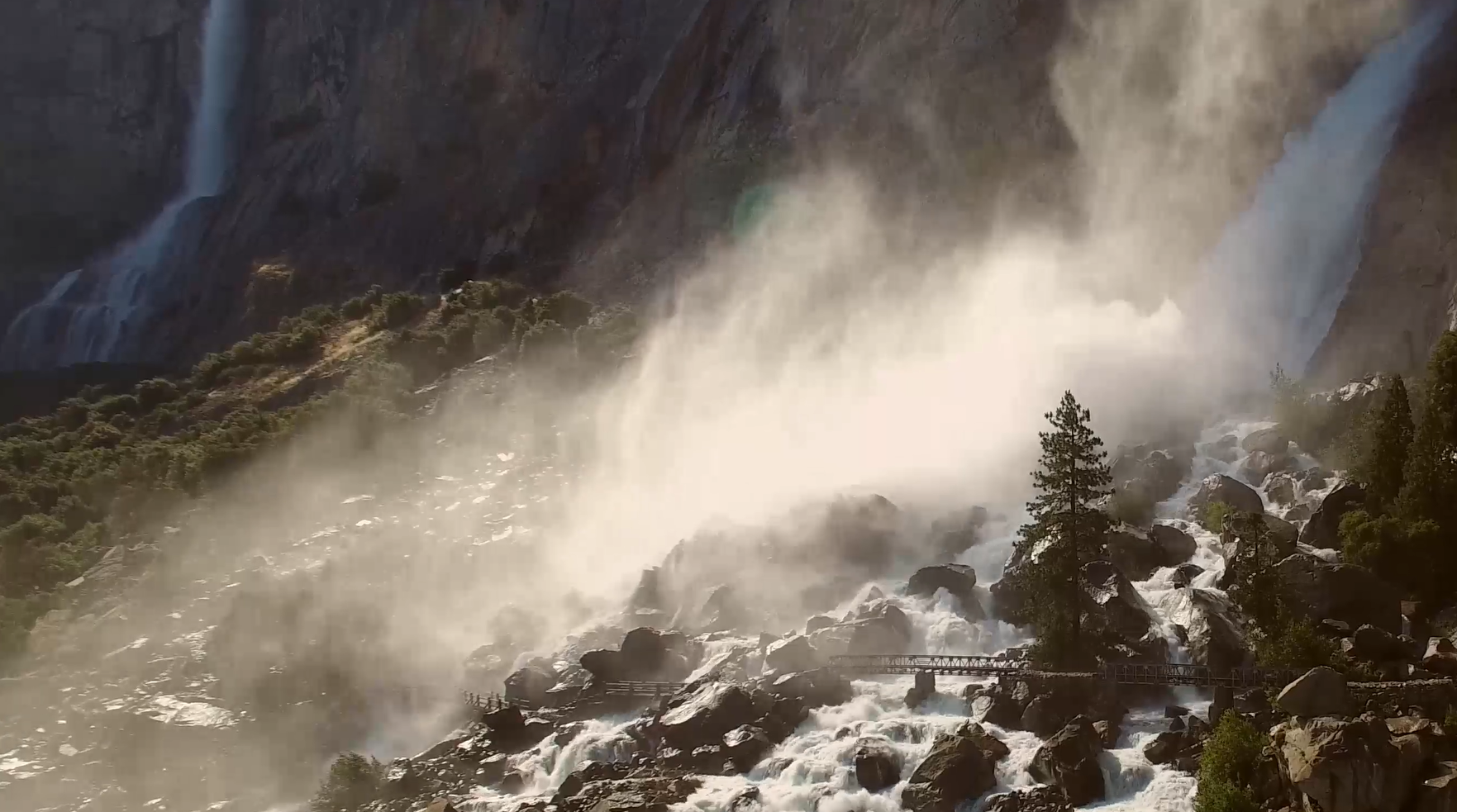
Wapama Bridge: As we have reported previously, the first of four bridges at Wapama Falls is unsafe to cross during periods of peak snowmelt – four hikers have been swept off the bridge to their deaths over the last two decades. And because that first bridge is just beyond a rock outcropping, it is not possible to see the falls up close when it is at its most spectacular.
Funding for the bridge has been available for a few years. The National Park Service hopes to complete in in summer of 2024.
Crossing the bridges at Wapama can be a wet and exhilarating experience. But at some point it is simply unwise. (click for larger image).
Boat Ramp: The boat ramp has been out of commission for some time, and neither the San Francisco Public Utilities Commission nor the National Park Service has been able to use it for research or rescue. We are happy it will be fixed.
There are no plans at present to allow visitors to explore the canyon by boat as we have requested and as Congress expected when it passed the Raker Act. We are continuing to encourage the National Park Service to change their policy so visitors can get a better views of the entire canyon as well as day-trip access for hikers, fishermen and rock climbers to locations along the reservoir’s perimeter.
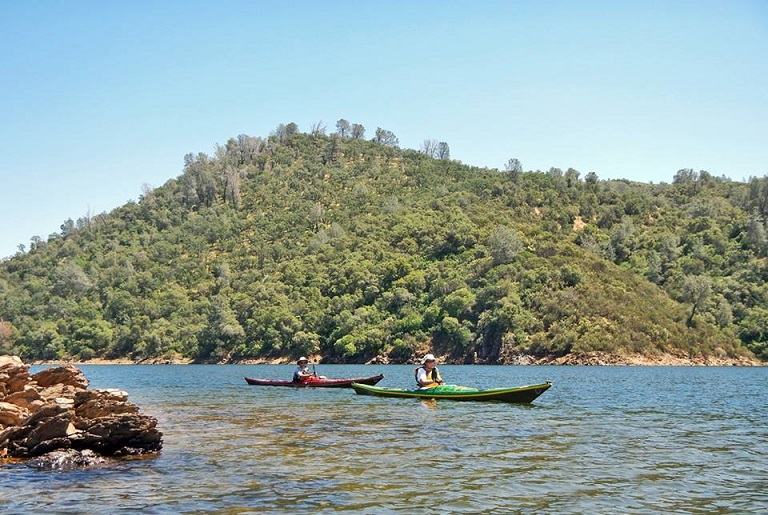
Boat rentals are available at East Bay MUD’s Pardee Reservoir, downslope and north of Hetch Hetchy. EBMUD is known for delivering high quality water to its customers.
We are happy that San Francisco has funded these improvements. Restore Hetch Hetchy continues to work with the City and National Park Service to improve the visitor experience, which we believe is a key element to building support for the valley’s restoration.
Restore Hetch Hetchy is grateful to all our supporters. We appreciate your contribution on this last day of 2023.
With your help, we can return Hetch Hetchy Valley to its natural splendor.
Happy New Year from the RHH team!
It’s with your support that we are able to create change. If you’d like to make a contribution to Restore Hetch Hetchy, you can do so online or by mail to the address below:
Restore Hetch Hetchy
3286 Adeline Street
Suite #8
Berkeley, CA 94703
Tax identification number: # 77-0551533
Thanks to all who support restoring Hetch Hetchy Valley in Yosemite National Park.
A few reminders about the our historic campaign:
The damming of Yosemite’s Hetch Hetchy is the only time in our nation’s history that we allowed a city to develop a national park. Less than three years after Congress passed the Raker Act allowing Hetch Hetchy to be dammed, it passed the National Park Service Act, helping to ensure that such destruction would never again be allowed.
Damming Hetch Hetchy turned the Sierra Club from an outing club into a political organization, and set the stage for the broader environmental movement in place today.
Hetch Hetchy Reservoir is one of nine storage tanks operated by the San Francisco Public Utilities Commission. Studies by the U.S. Government, UC Davis, the Environmental Defense Fund, Restore Hetch Hetchy and others have all shown the water supply function of the reservoir can be replaced.
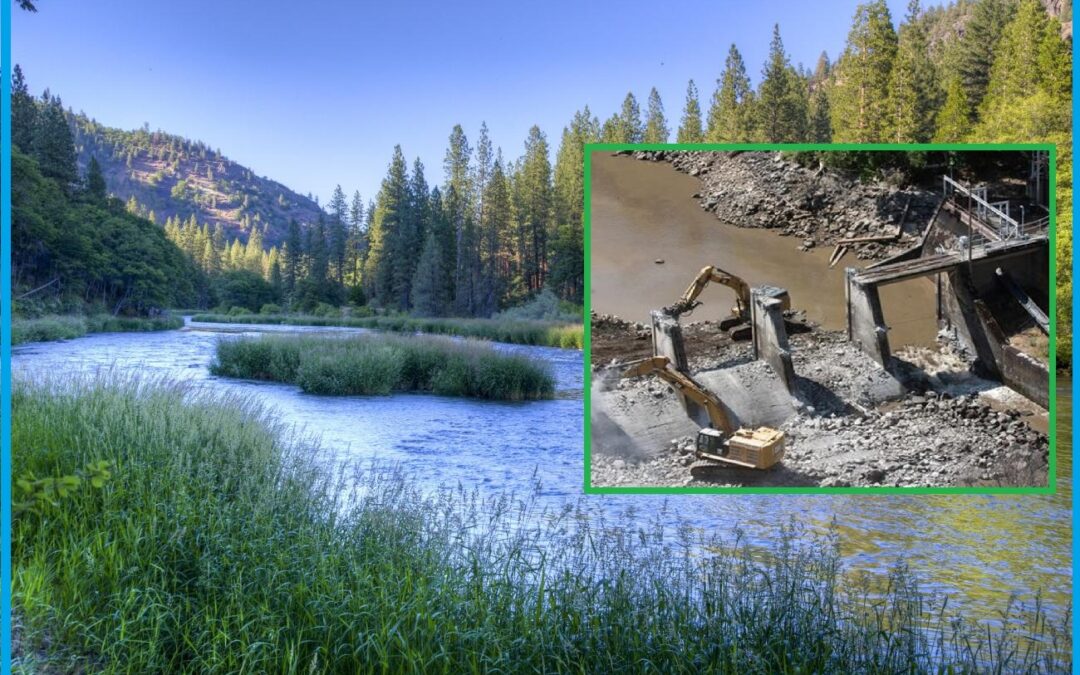
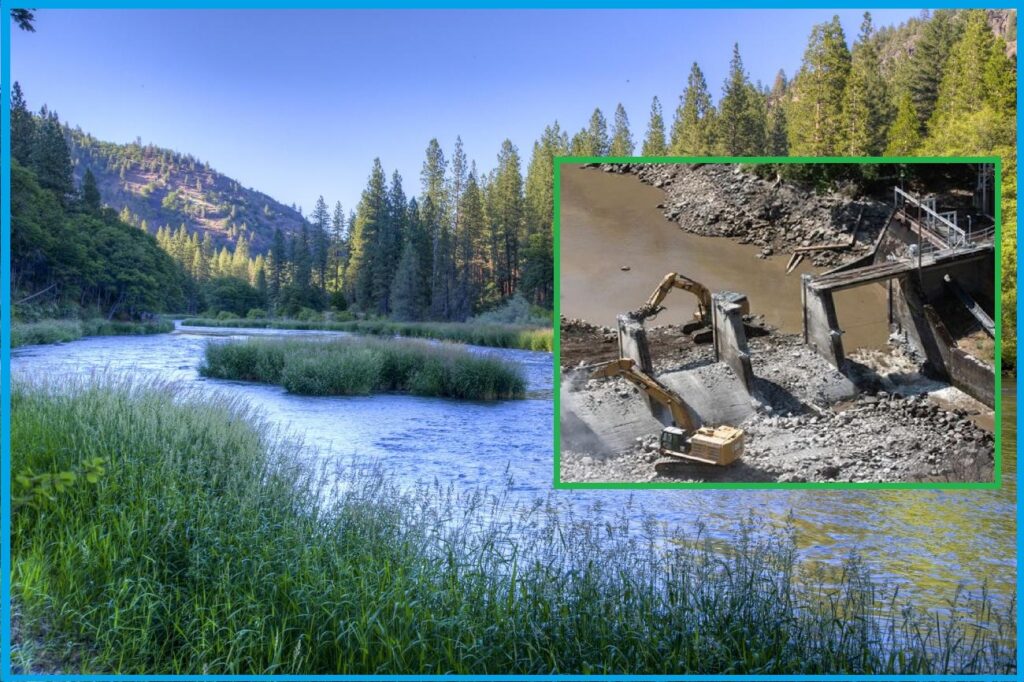
Environmentally destructive dams are being removed across the country and in California on the Klamath, Eel and other rivers.
Experts predict that one day a San Francisco politician will wake up and say “This is the right thing to do … this is going to will be one of the world’s most amazing restoration projects.”
Restoring Hetch Hetchy gives us the chance to get it right – to create a visitor friendly experience without the congestion and traffic that too often diminishes the visitor experience in Yosemite Valley. A restored Hetch Hetchy will be a majestic glacier-carved valley with towering cliffs and waterfalls, an untamed place where river and wildlife run free, a new kind of national park.
The removal of Copco 2 (inset) and other Klamath dams will help restore the river’s health and salmon populations.
It’s with your support that we are able to create change. If you’d like to make a contribution to Restore Hetch Hetchy, you can do so online or by mail to the address below:
Restore Hetch Hetchy
3286 Adeline Street
Suite #8
Berkeley, CA 94703
Tax identification number: # 77-0551533