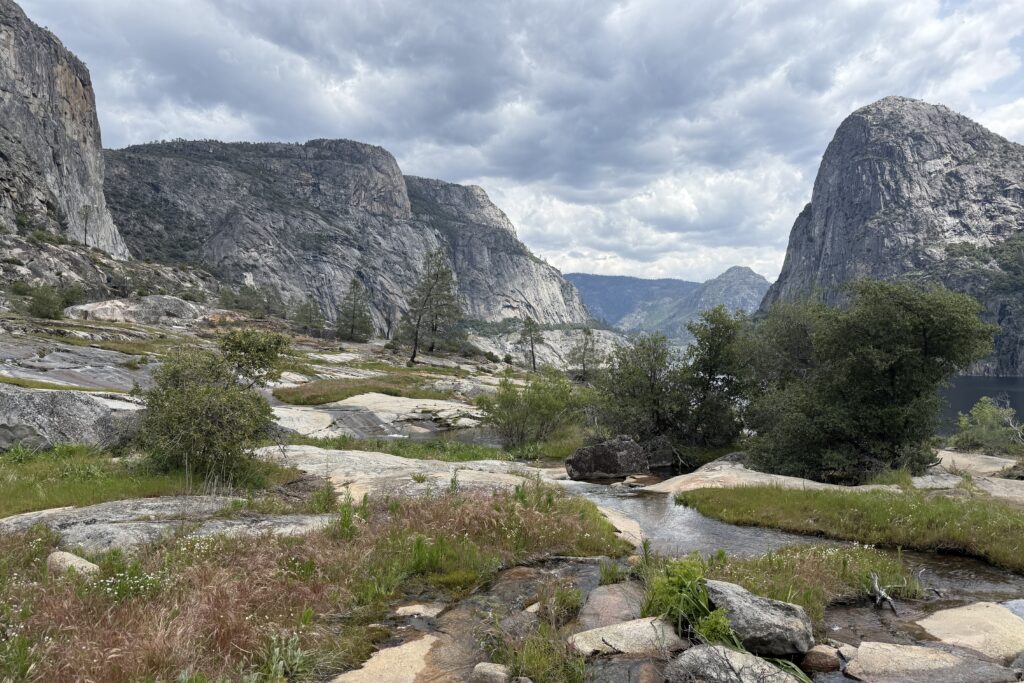
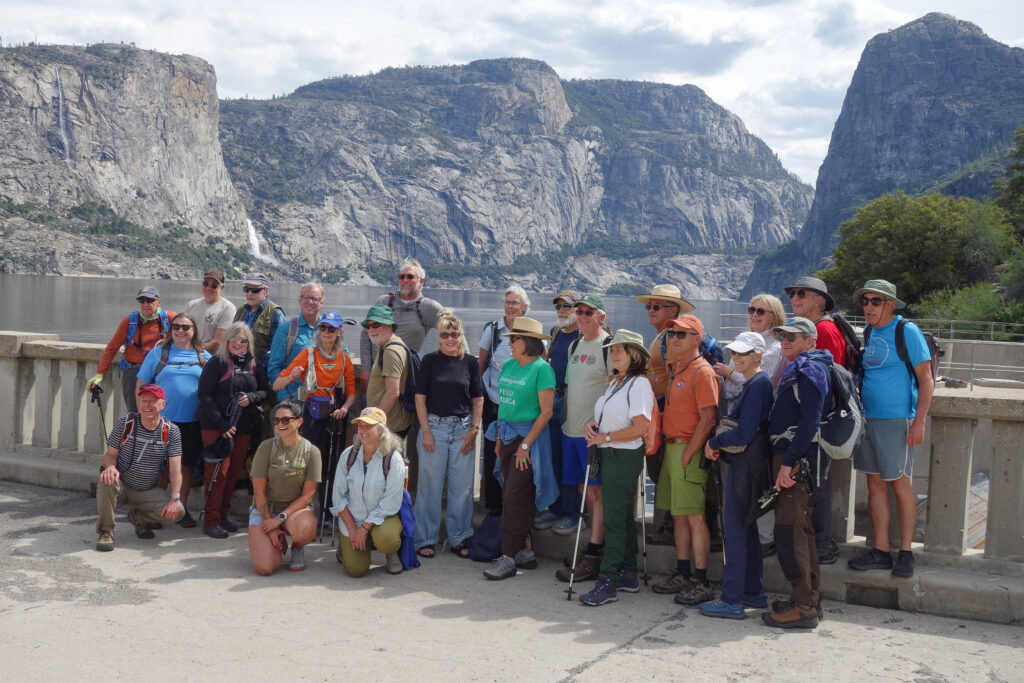
Photo: Roger Williams, Restore Hetch Hetchy Board Chair. Click herefor high resolution version.
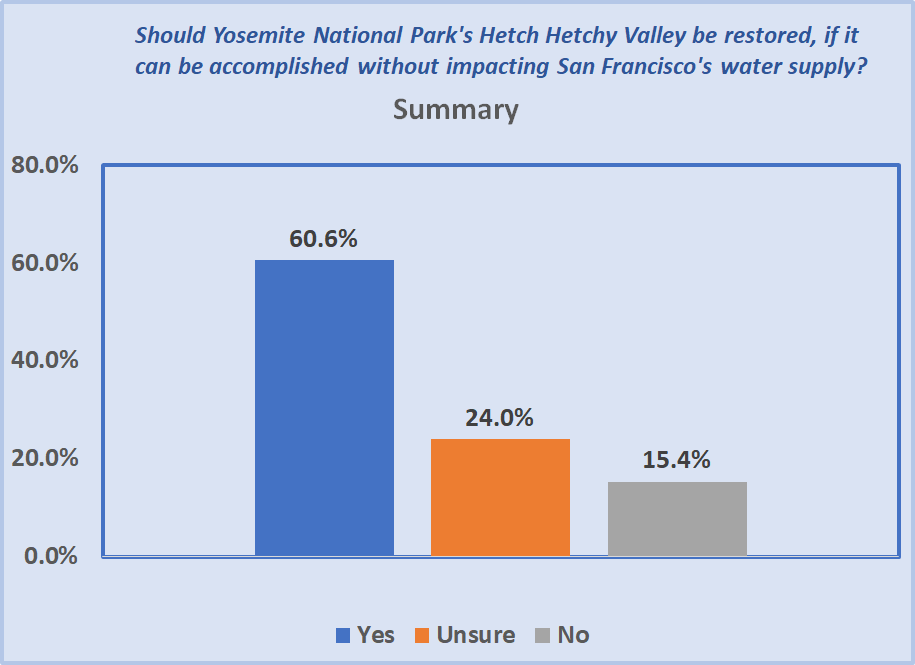
We asked Probolsky Research to add a Hetch Hetchy question to a statewide poll conducted in early May – the very same question we asked in 2019. We like the results!
Restoration supporters outnumber opponents by almost 4 to 1!
Our challenge is to convert this broad public support into support among our elected officials. We will be sure to share these results.
The question was preceded by a brief explanation, and asked as shown below:
Question: California’s Yosemite National Park once included two glacier-carved valleys – Yosemite Valley along the Merced River and Hetch Hetchy Valley along the Tuolumne River. In 1913, Congress allowed San Francisco to dam Hetch Hetchy Valley and turn it into a reservoir for the City.
Should Yosemite National Park’s Hetch Hetchy Valley be restored, if it can be accomplished without impacting San Francisco’s water supply?
We asked the question with a bit of trepidation. How might people respond? Are they still positive about the visionary opportunity for restoration? Or are people in sour moods, perhaps after following a series of generally negative gubernatorial debates which have dwelt on serious challenges that California faces. Would respondents still favor the positive vision of returning Hetch Hetchy Valley to its natural splendor?
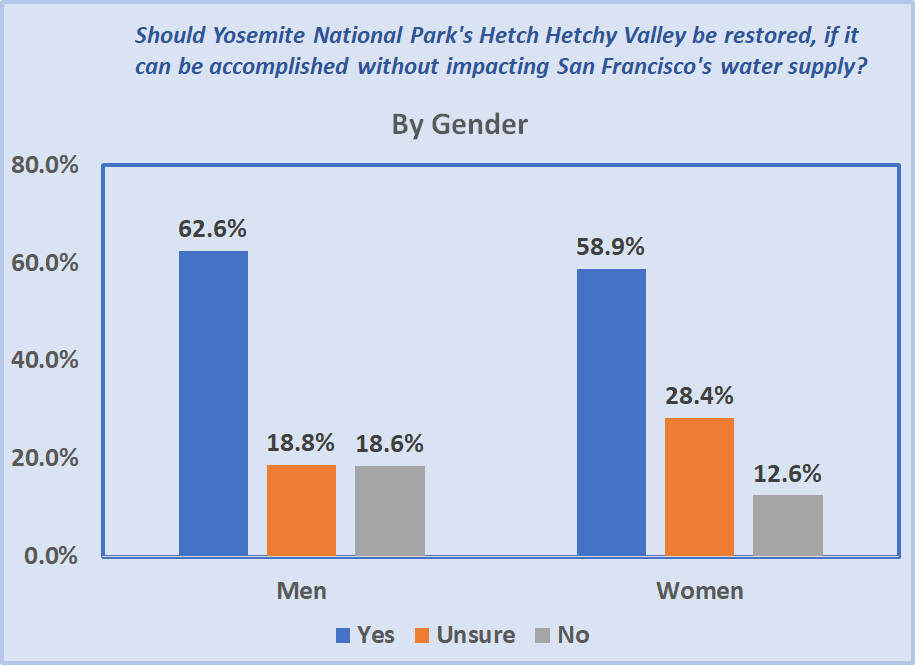
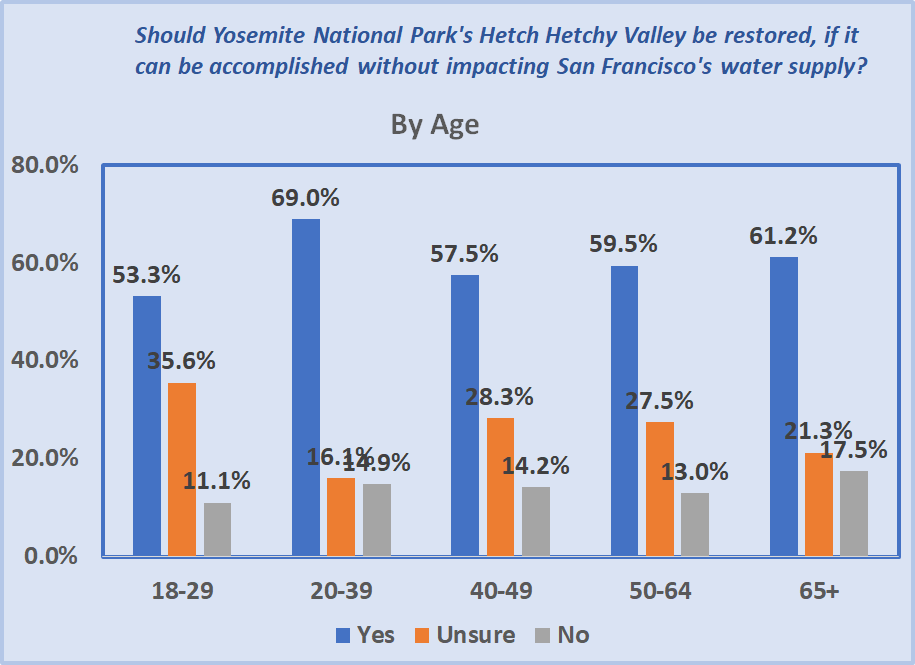
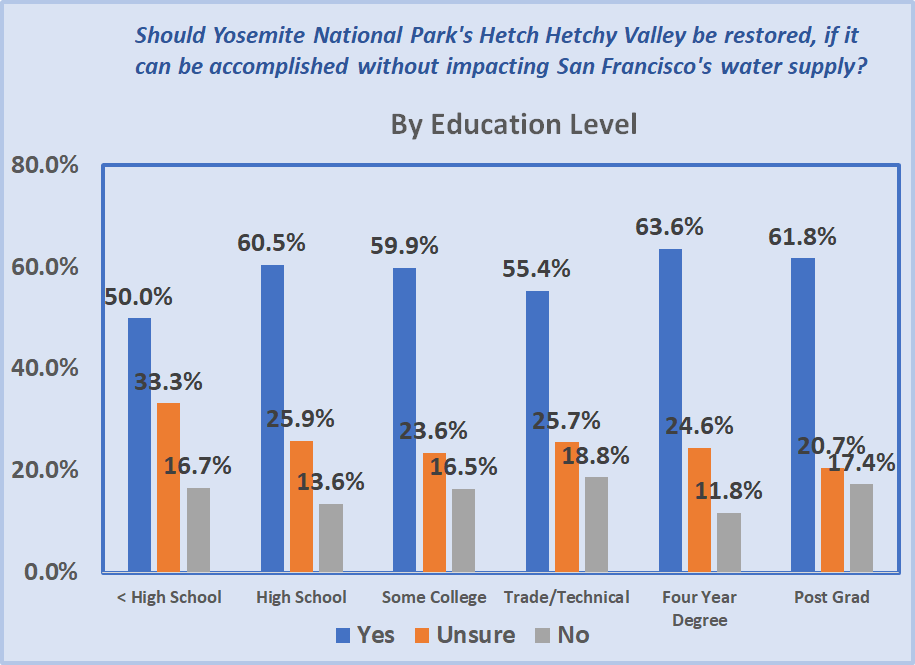
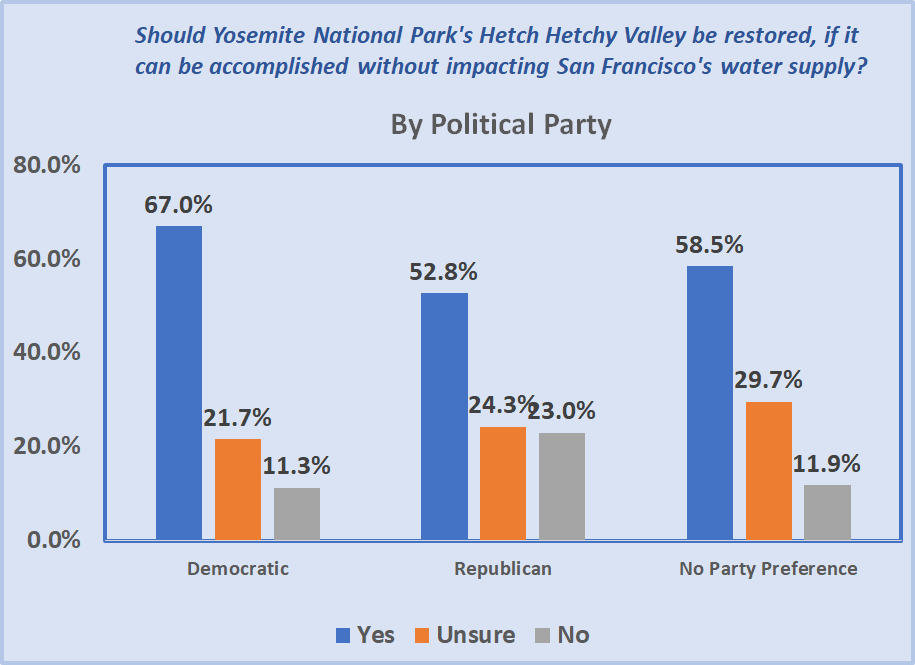
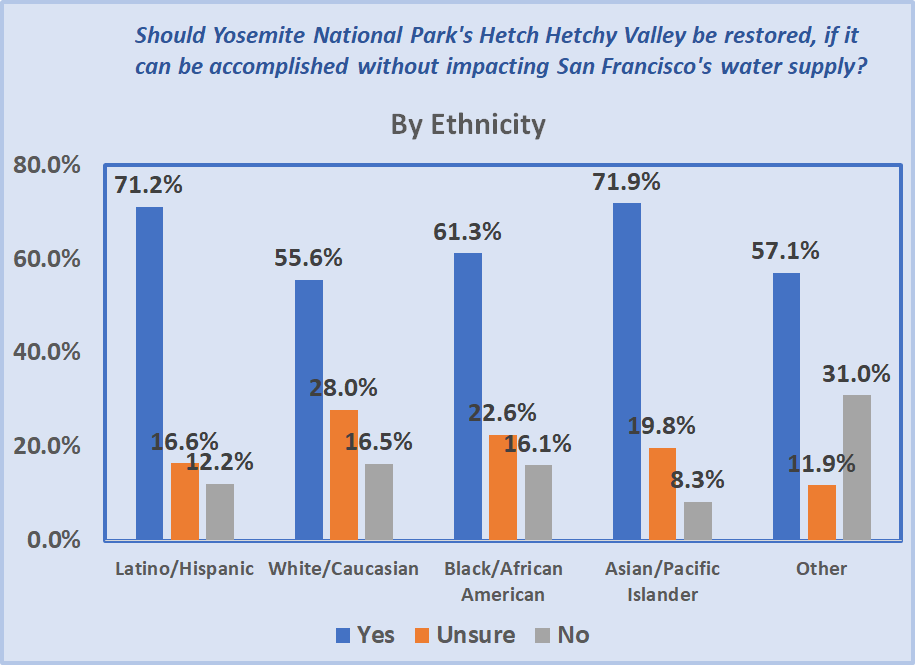
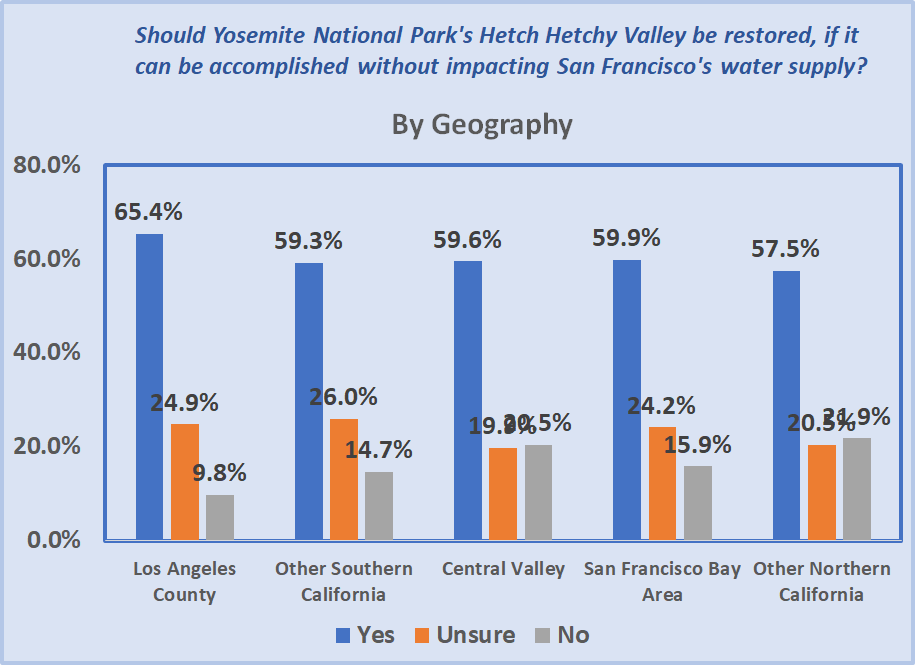
Our fears were assuaged. Every demographic measured by the Probolsky folks support restoration, with relatively little variation.
The results are very similar to what respondents said in 2019. More than 60% of California’s population continue to favor restoration. The most obvious overall difference is that fewer people are opposed to restoration, and instead say they are unsure. Another interesting difference is that the 2026 results did not indicate a dip in support in the Bay Area as had been the case in 2019
Probolsky’s reports are posted online for both 2026 and 2019.
For breakdowns by gender, age, education level, political party, ethnicity and area, see charts below.
We plan to encourage elected officials to take action over the next several months. As part of our effort to show broad support, we have posted a simple petition on our website. Please take a moment to sign – and ask your friends to do so as well (they can select whether or not they want to be added to our list for updates).
If you need any encouragement, check out (again perhaps) Libby McLaren’s phenomenal and stirring version of Bill Oliver’s “Hooray for Hetch Hetchy.” Libby is a proud graduate of Berkeley’s John Muir Elementary – class of ’67.
One last thing. Great news. The endangered California red-legged frog has made a strong comebackin Yosemite and may soon be introduced in the Hetch Hetchy area.
The California red-legged frog – photo Jamie Bettaso USFWS
Visitors flocked to Hetch Hetchy last weekend as they did to all of Yosemite National Park. Long waits at entrance stations and full parking lots frustrated visitors. Many have called for a return of a reservation system to manage crowds during periods of peak demand.
Parking at Hetch Hetchy was full by 12:30. Fortunately, our entourage met at 10:30 and had a brief discussion at the dam before heading out to Wapama Falls.
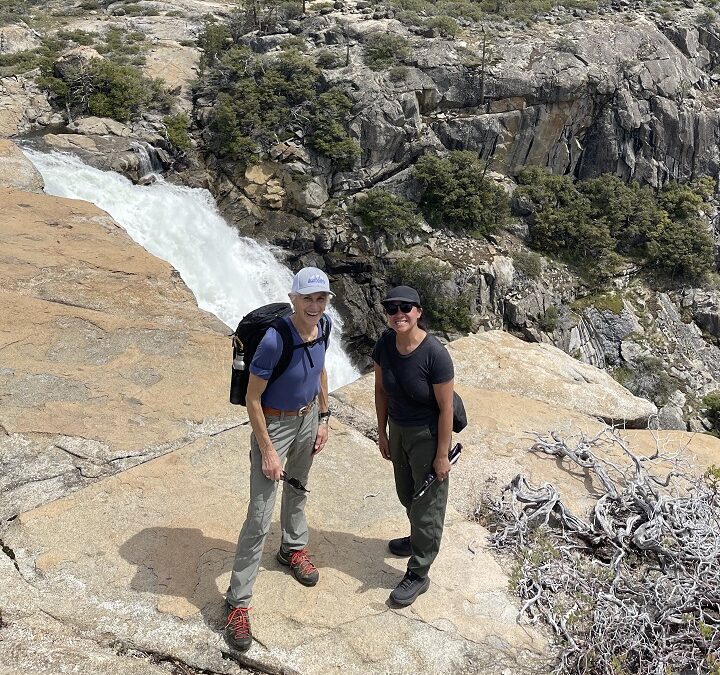
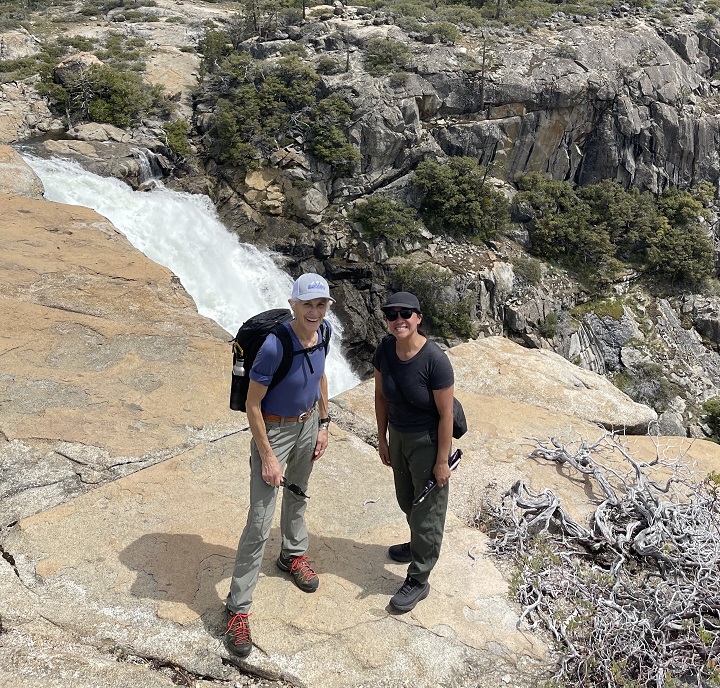
We saw more folks on the trail to Wapama than ever. It was warm enough that the icy spray from the falls was most welcome. Some of our group sought more adventure, and went down to Poopenaut Valley or up to the top of the canyon above Tueeulala and Wapama Falls. Photo Alice Chung
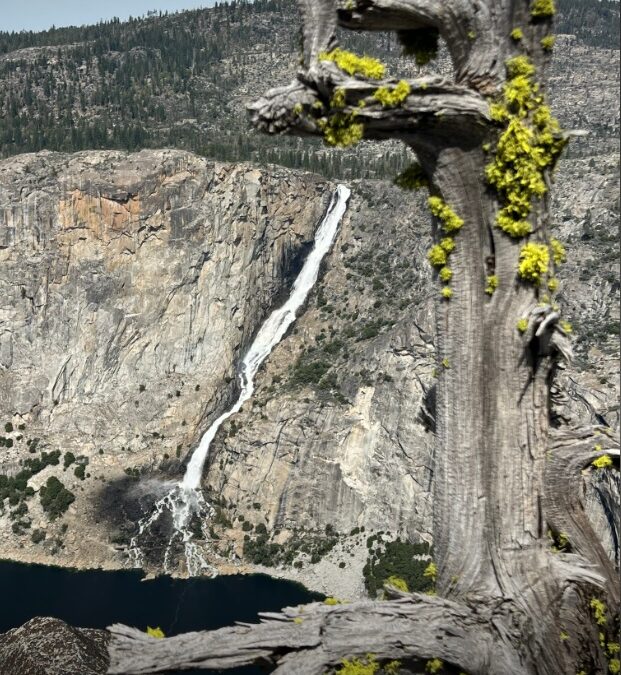
Wapama Falls from above. Access requires off trail hiking, making the journey challenging but ever so rewarding.Photo Lucho Rivera
At Restore Hetch Hetchy, we don’t anticipate restoration will substantially reduce crowding in Yosemite Valley. It will help some.
Returning Hetch Hetchy to its natural splendor will, however, provide a glorious alternative that will welcome visitors to a valley with less infrastructure and congestion. Reasonable people will debate passionately how best to manage visitor use in a restored valley. We can’t wait for that discussion, but first we have a reservoir to relocate.
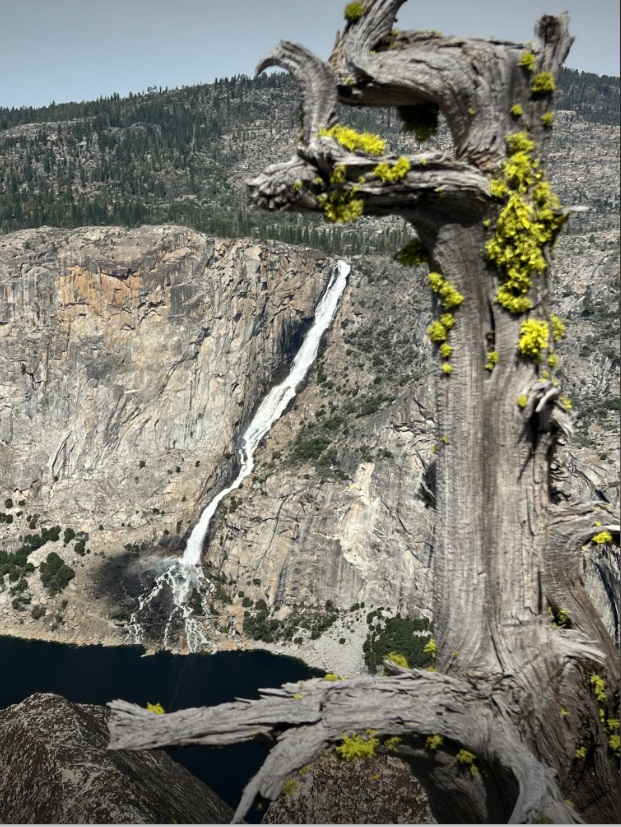
It’s a stunning shot, and a view rarely seen. Restore Hetch Hetchy board member Mecia Serafino scrambled 1800 vertical feet to the top of Kolana Rock to get a clear view of the entirety of Wapama Falls. Mecia reports she didn’t mind getting a bit of poison oak while bushwhacking along what might generously be called a trail.
Mecia Serafino
Mecia’s photograph has been entered in Firefall Ranch’s Spring Renewal contest – please vote for it.
Wapama Falls from the top of Kolana Rock – photo by Mecia Serafino.
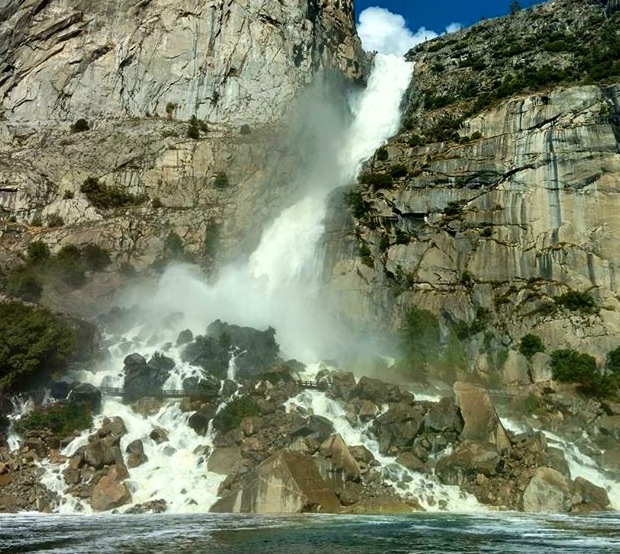
Few people who have visited Hetch Hetchy have seen the entirety of Wapama Falls. You can only see the lower portion from the O’Shaughnessy Dam. Even when you hike to the falls and cross the stream beneath Wapama (an exhilarating experience), you cannot see the top.
Were the valley undammed, of course, it would be simple to saunter across the meadow to see the full waterfall. Or even, as Congress expected, visitors would take a boat across the reservoir and see the whole thing.
Mecia’s view is special. It is all of Wapama Falls – not from below but from the top of Kolana Rock. Let’s be honest. Few of us are likely to hike to the top of Kolana – poison oak or not. Thanks to Mecia for doing this.
The entirety of Wapama Falls (during peak snowmelt) from the reservoir – a perspective not available to the public.
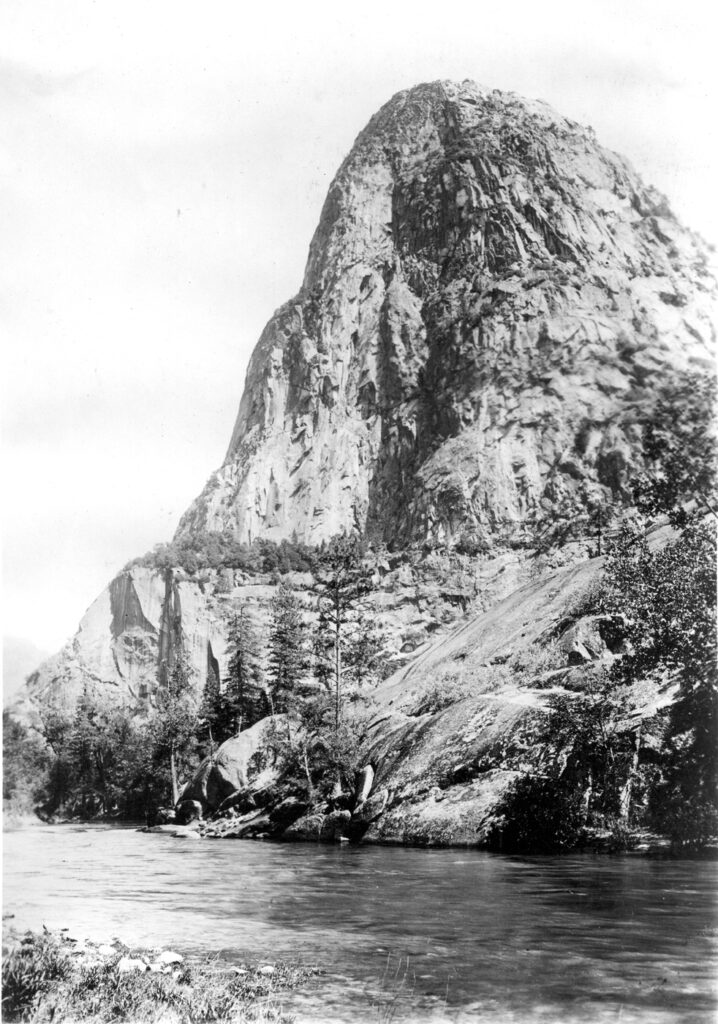
Kolana Rock, before Hetch Hetchy was dammed, rose 2100 feet above the valley floor.
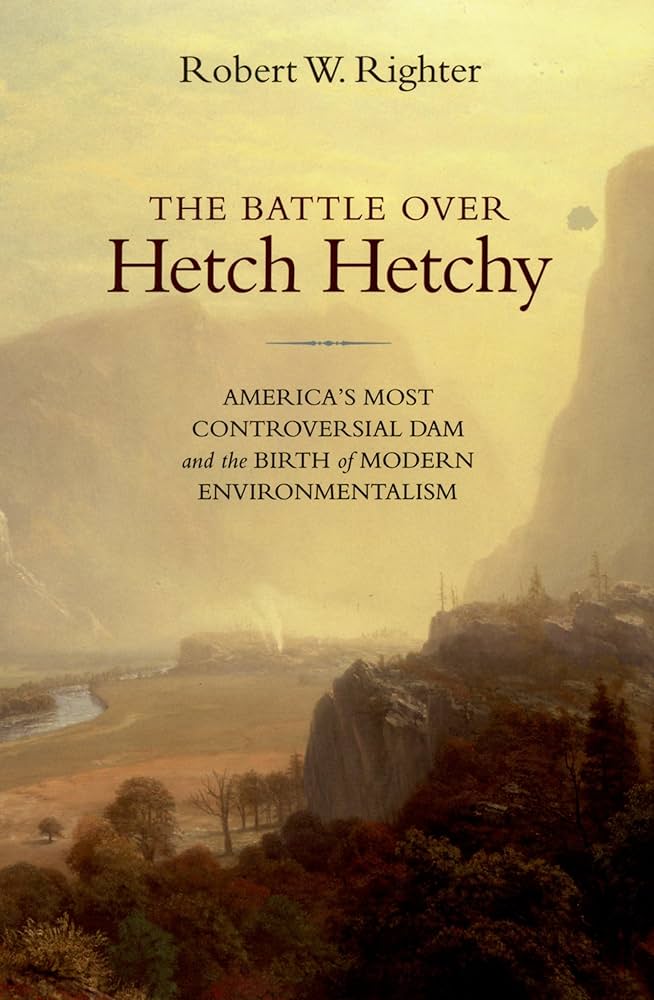
In The Battle over Hetch Hetchy: America’s Most Controversial Dam and the Birth of Modern Environmentalism (2005), Historian Robert Righter recounts the philosophical difference between “Preservationist” John Muir and “Conservationist” Gifford Pinchot, first head of the United States Forest Service who supported damming Hetch Hetchy because it provided “The greatest good to the greatest number for the longest time.”
Righter is correct that Hetch Hetchy ignited the activism we see today, but the term “environmentalism” was not really used in its current context until 1970 or so.
Today, environmentalism means different things to different people and different organizations. At Restore Hetch Hetchy, we’re committed to the idea, passion and value of preserving and restoring Earth’s most spectacular landscapes and we are laser focused on Hetch Hetchy – the one landscape in our great national park system that has been damaged.
Today, many “environmental” organizations have broadened their mission well beyond natural landscapes and some do not address natural landscapes at all.
Authoring “Yosemite’s conservationists: an Earth Day message“, Ken Braun, Managing Editor and Director of Content for the Capitol Research Center, opines that “advocates for both conservation and energy abundance could and should once again become—quite literally— natural allies.” He recounts with disappointment how the Sierra Club has evolved from being the premier protector of public lands to an organization opposed to energy development. He is more positive about The Nature Conservancy and is a big fan of Restore Hetch Hetchy (Yosemite is his “#1 favorite place on the planet and #2 is not close”).
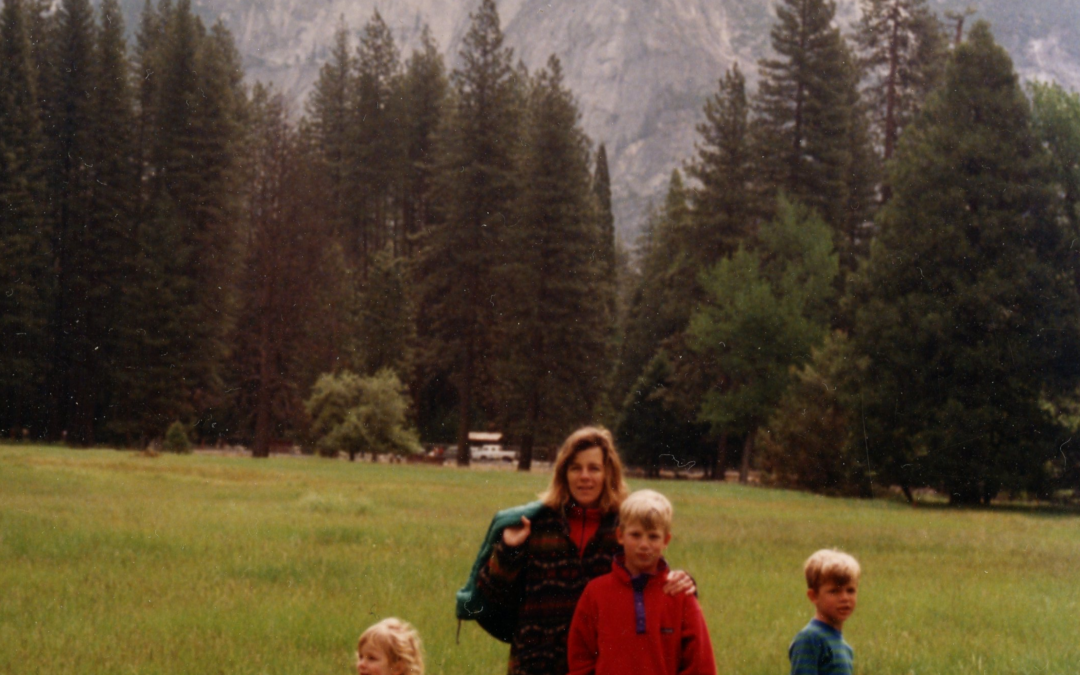
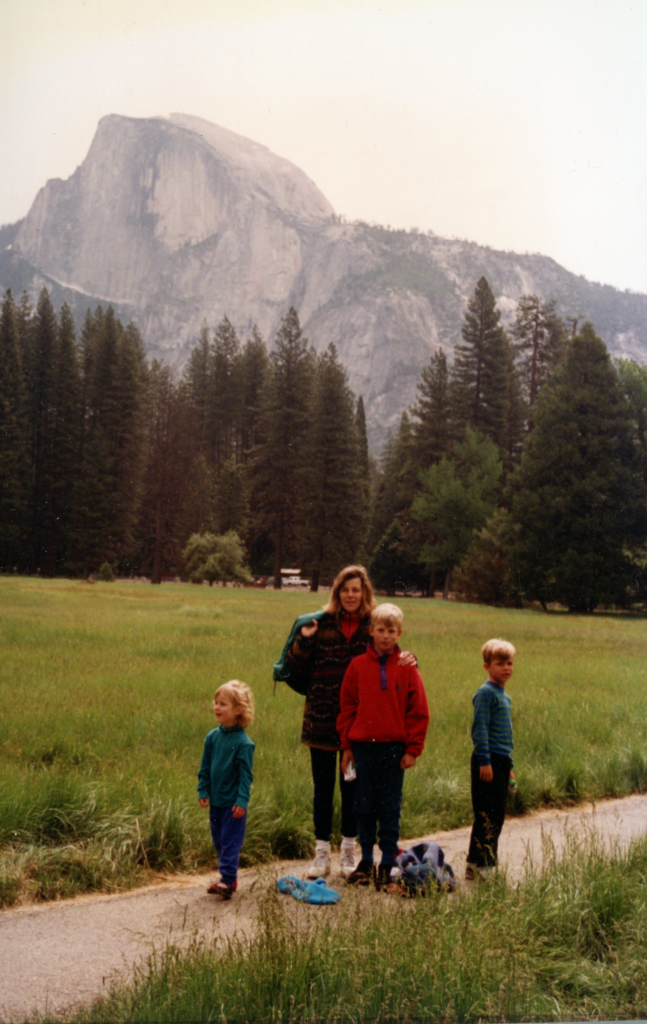
Long before Restore Hetch Hetchy, Executive Director Spreck Rosekrans and his wife Isabella took their kids out of school on a whim and headed off to Yosemite. Ken Braun would understand.
We are sympathetic to Braun’s view. Restore Hetch Hetchy, after all, was founded by Sierra Club members who were highly motivated to find a physical and political solution that would allow Yosemite’s second great valley to be returned to its natural splendor. We take pride in identifying and proposing practical water and power solutions that meet human needs.
We do understand, however, that the Sierra Club and so many others tackle complicated worldwide issues related to energy development and, in many areas, water supply development.
At Restore Hetch Hetchy, we mostly stay in our lane. But we are big supporters of solar power with battery backups that have been successfully and cost-effectively developed in California and other areas. And we are big fans of improved groundwater recharge in wet years, recycled water and improved markets (see last week’s blog).
Another Earth Day message comes from Edward Ring, director of water and energy policy for the California Policy Center, in his Ringside: The Abundance Alliance. Ring does not outwardly support or oppose restoring Hetch Hetchy (or Mono Lake or the Salton Sea), but he implicitly acknowledges them as noble objectives as long as environmentalists “embrace big projects”.
Ring has a point. We all (self-identifying “environmentalists” and those who eschew such a moniker) need to be practical about meeting human needs. But the devil is in the details. Water recycling may share the same core technology as desalination but it has far fewer impacts. Ring’s description of how to add 10 million acre-feet of water supply includes some ideas that should be pursued, some that shouldn’t. Further the proposal conflates storage with supply – building a reservoir does not mean if will fill.
Restore Hetch Hetchy takes pride in being serious about water and power solutions – mostly those related to our narrow (yet oh so grand!) objective, but also for the world at large. We don’t support the same approaches Braun and Ring propose. But we do support robust public debate about all technologies and proposals as well as decisive action to implement projects that serve the needs of our communities without undue financial or ecological cost.
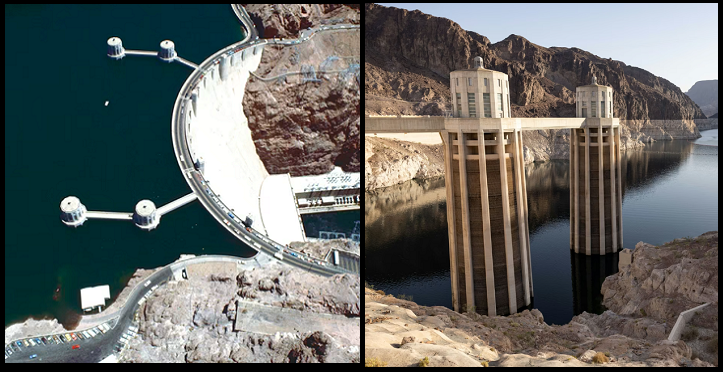
As a result of the highly-publicized, long-term decline in Colorado River supplies, Las Vegas and Arizona are eager to find additional water. Shown above are Lake Mead’s intake towers in 1983 and 2022.
Water markets are often controversial and are institutionally complex. So buying and selling of supplies between water agencies happens less than it should and many areas do not have sufficient incentives to use water efficiently. (More on this philosophy below.)
San Diego’s surplus is the result of three things:
Investment in the Claude “Bud” Lewis Carlsbad Desalination Plant,
Investment in its Pure Water recycling program, and
Reduced demand.
Recycling and desalination both rely on the same core technology – using energy to squeeze water through high-efficiency membrane filters (aka nanofilters). Desalination, however requires far more energy due to the high salt content of ocean water. In addition, the disposal of excess brine is problematic and nobody wants a desalination plant on their beach.
San Diego’s “Pure Water” recycling project, however, is intriguing from an environmental perspective. Its genesis is not simply from the desire for more water, but also from mandates to reduce pollution from its Point Loma wastewater plant. See our Fall 2021 Newsletter story.
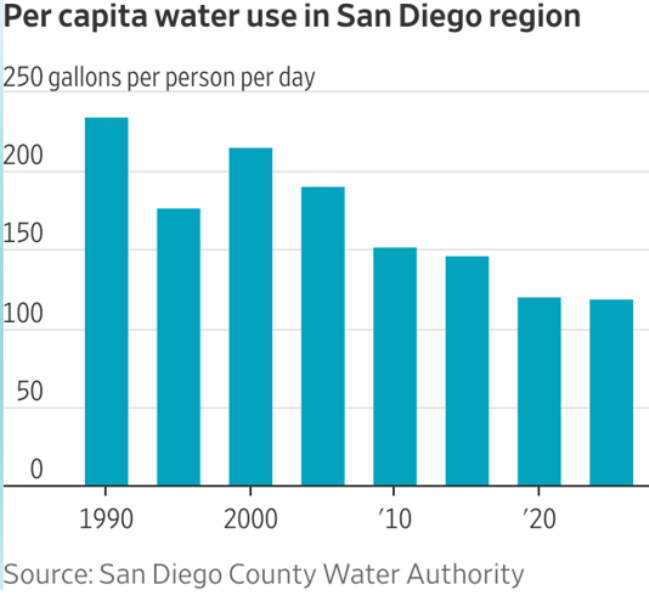
Additionally, urban water demand in San Diego has dropped, as it has throughout the state. People are watering fewer lawns and indoor fixtures are more efficient than ever.
As a result of its overinvestment, San Diego will be selling water to Las Vegas and Arizona, areas that are seeing reduction in their supplies from the Colorado River. This will bring at least some rate relief in San Diego. We can think of it as selling desalinated and recycled water, but the inland customers will actually be using Colorado River water that would otherwise go to San Diego.
At Restore Hetch Hetchy, we are pleased these agencies are doing business. As noted above, we are fans of San Diego’s recycling project but we are not fans of desalination (it’s an expensive, harmful technology we don’t need at this time and hopefully never will).
As promised above a bit more on selling water, first published on World Water Day in 2010
Balancing the Water Business and the Public Trust
By Spreck Rosekrans | Published: October 15, 2010
Aristotle was right. Water, along with earth, air and fire, is a one of the primary elements upon which life depends. Water is essential for our homes, our businesses, and especially for our farms. Water also is the great elixir that sustains fish, wildlife and the natural world.
Across the globe, as a result of increases in population, depletion of groundwater basins and the uncertainty of future precipitation, shortages of this precious fluid continue to become more commonplace. Providing reliable water supplies requires both cost-effective investments in infrastructure as well as policies and incentives to ensure that existing supplies are used fairly and efficiently.
There is a fundamental public interest or trust in water which requires that the environment and local communities be provided sufficient supplies and protected from more powerful and often remote economic interests. As water supplies decline, citizens in the 21st century should plan to monitor governmental management of water closely and to ensure that these indispensable public values are protected.
However, the private sector has an important role to play as well. Improvements in efficiency as well as evolving human and environmental needs will inevitably bring about changes in water use patterns. A business model — with appropriate constraints — should be employed that allows and encourages innovation. In many cases, water should be marketed to those who can use it most efficiently and productively. More opportunity for appropriate water marketing will bring out the best ideas that resourceful water users, urban and agricultural alike, can implement.
By improving efficiency in cities and on farms, economic incentives will help maximize food production and meet business needs while optimizing the use of limited water supplies. As a result, it will be easier to meet basic human needs and to reduce the pressure to extract ever increasing amounts of water from our rivers and streams.